

Weather, wisdom and working dogs
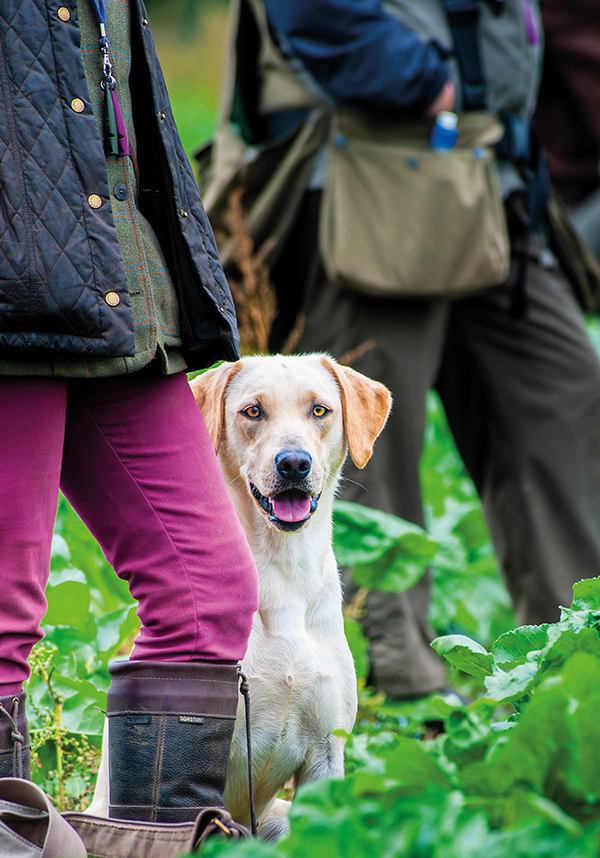
Matt Limb OBE looks back at the shooting season, the ever diminishing number of gundogs and old lessons learned with his two spaniels.
By the time this reaches print we will be in that curious lull between seasons, the fallow weeks after the last driven days have echoed away and before spring properly gathers momentum.
It is a pause that arrives quietly each year. Guns are cleaned and returned to cabinets, dogs begin looking as if to ask why we have not been out picking up again this week and diaries once inked with favoured days start to appear vacant.
It is at this point, when there is time and space to think, that I find myself looking back over the winter. Not simply to list the good days or the memorable moments, but to assess what was achieved, good and bad, plus most important, what was learned.
And I mean learned in the proper sense of the word; actions to be considered, absorbed and acted upon, rather than politely acknowledged and left to be rediscovered again in the future.
For me, that reflection is less about cartridges spent and more about ground covered behind the spaniels.
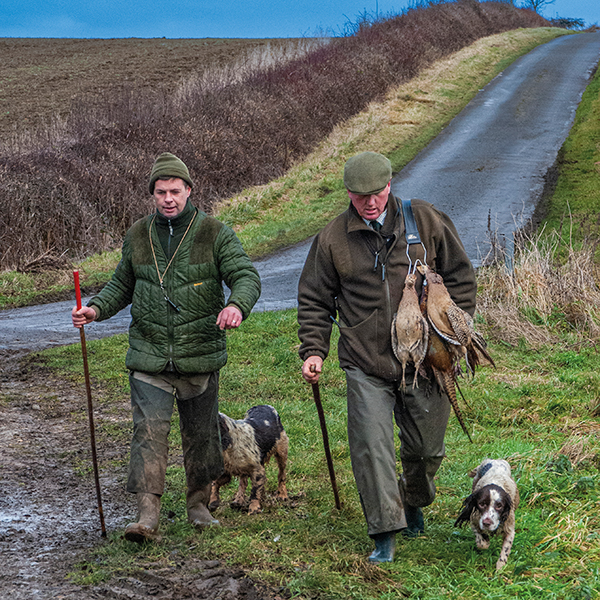
I do not shoot a great deal these days; I am far more often found working dogs, watching how they respond to conditions and the pressure of the day.
A season reveals itself differently when seen from a dog’s vantage point.
Weather watching
If one theme defined this winter, it was undoubtedly the weather. November began in shirt-sleeves, lunches taken outdoors in conditions that felt more like early September than the approach of winter.
December delivered its expected cold snap, enough to remind us of the season we were meant to be in.
But it was the New Year that truly stamped its character on proceedings. Persistent rain, sodden ground and a procession of named gales swept across the country. January tested birds, keepers and Guns alike, with some days requiring determination simply to stand upright, let alone shoot well.
And yet, as ever, it is often such demanding and challenging days that leave the clearest and lasting impressions.
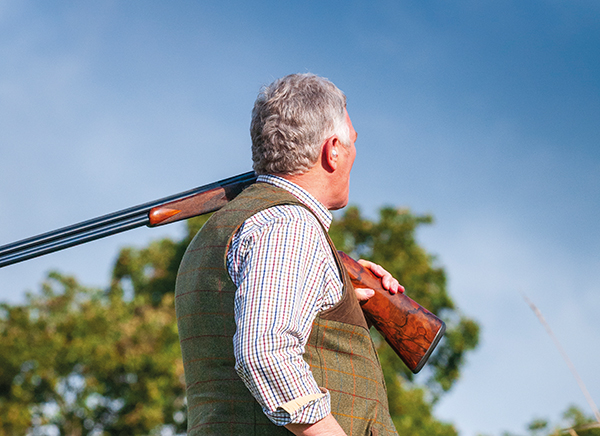
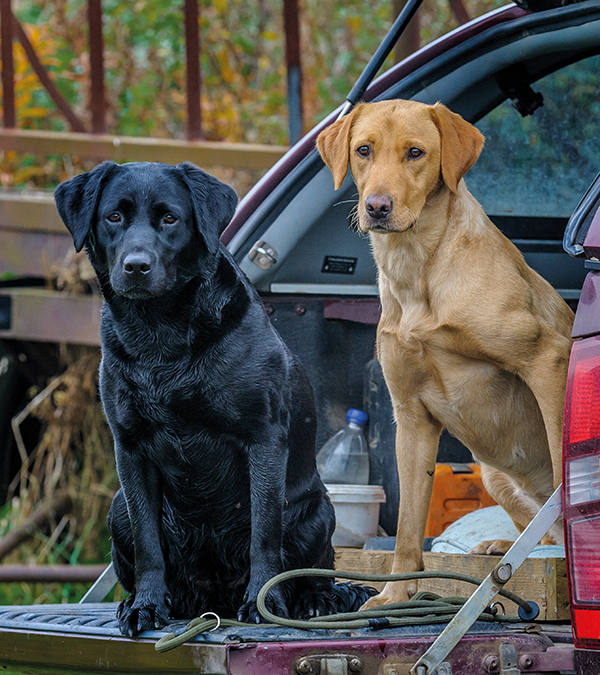
Alongside the weather, there remains another trend I have been quietly watching for several seasons now and this winter it felt no less apparent. There still seems to be a noticeable absence of dogs on pegs.
While I may not shoot often, I do stand behind plenty of Guns and work spaniels through enough drives to see patterns emerge. Increasingly, I find myself looking along a line and counting fewer dogs sitting patiently at their owner’s side. Peg after peg is occupied by a Gun standing alone. Then when the whistle blows at the end of the drive, they step forward to retrieve by themselves, leaving the picking-up team to sweep over the ground.
For me, that feels like something is seriously missing.
Quiet partnerships
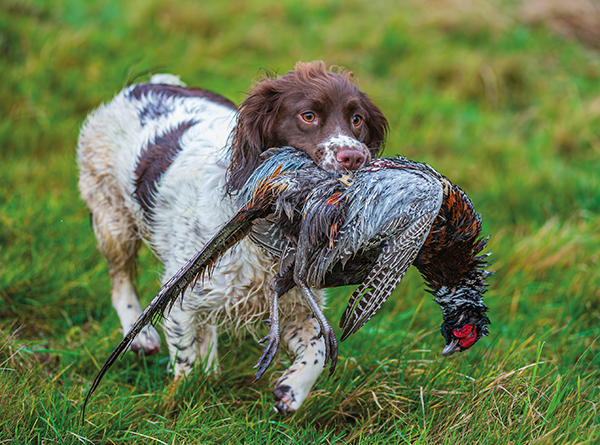
One of the greatest highlights of any day’s shooting, must be to finish a drive and watch your dog collect your birds. There is a deep satisfaction in this quiet partnership as the work is completed together. Better still is taking your retrieved bird home, knowing it will become a shared Sunday lunch, so becoming a tangible link between the field and the table.
I feel a dog on a peg changes the rhythm of a drive. It connects you. There is focus, partnership and a lasting quiet anticipation.
As the Gun watches the sky, the dog watches the Gun. When a bird falls cleanly nearby and is sent for, it is not simply retrieval but the completion of a longer shared task.
Few sights on a shoot day are more pleasing than a busy dog at the end of a drive, gathering partridges or pheasants neatly to hand, while its owner stands quietly at the peg. There is pride in that moment, but also contentment.
But the number of peg dogs does not appear to be increasing. We remain a nation of dog owners; training is more accessible than ever and working breeds are as popular as they have been in years. So why are fewer dogs standing on pegs?
I do not pretend to know the full answer. It may be just confidence. It may be modern shoot etiquette. It may be concern that a dog is not simply good enough to be on a shoot day. Or perhaps, gradually and without quite noticing, some have separated the skill of shooting from the presence of a dog altogether.
From the vantage point of someone who works spaniels far more often than he fires a cartridge, it does make me pause, think and wonder.
Harris makes his debut
If this last season had a personal highlight for me, it was taking Harris, my young Springer, through his first full year in the field.
As ever, the quiet fear sits in the background, will he be good enough? Before the season began, he was steady and obedient; he would not have been there otherwise. But training days and shoot days are very different things. There are more people, more noise, far more expectations and far more distractions.
In truth, those early days exceeded my hopes. Within a handful of outings, he began to truly settle. He showed no sign of being gun-shy, was calm around the Guns and beaters and worked sensibly alongside other dogs. Given his naturally quiet and at times slightly shy character, I was particularly pleased to see his confidence grow. But more than that, Harris was clearly enjoying himself.
And yet, despite all this, despite my relief and pleasure, something was still not quite right.
When I cast him out to hunt, he would not push out the distance I wished or hoped for. He would quarter effectively enough, but within his comfortable zone. A raised hand or a short pip on the whistle would see him sit instantly, attentive, waiting and listening, yet still reluctant to push further out. The obedience was there. The confidence to work at greater distance was not.
A few days into the season and with this identified, I took my old girl, Islay, with us. She was approaching her 12th birthday and, for all practical purposes, had retired.
I was careful to be selective; she did not work every drive, plus I watched her closely to ensure she was not over-tiring herself. It was just one day – but it was exactly what Harris needed.
As expected, when cast, Islay pushed out boldly, hunting with the depth and independence only experience brings. And then the light came on. Soon Harris began to follow, not blindly, but with a growing self-assurance.
He stretched his quartering pattern, pushed across the ground and began to understand what was being asked of him. There was no drama to it, no prolonged correction, just example and a lesson delivered – dog to dog.
The following outing, on his own again, the change remained. The confidence was there. Harris hunted stronger and further and it did not go unnoticed. Even the gamekeeper commented on how well he was shaping into a powerful young dog. For me, that quiet remark meant a great deal.
If ever proof were needed of what I miss in Jura, whom we sadly lost when Harris was still a young pup, this was it. Jura would have been Harris’s natural mentor through his first season. Instead, for a carefully selected and timely day, Islay stepped back into the role; just as she had for Jura in past seasons.
I am a firm believer in having an older, experienced dog alongside a younger one, provided the basics of obedience are already secure.
A veteran cannot replace training, but they can accelerate understanding in a way no whistle or hand waving quite manages. There is a quiet apprenticeship that happens in the field and this winter I was reminded just how valuable and strong it is.
End of season
It was on the back of this that I had the most memorable day of the season, which came at the end. The final shoot day was one of those cool, crisp January mornings, slightly drier underfoot for once, the air clean and sharp.
I decided to take both Harris and Islay for the day, highly conscious that future opportunities to see them working side by side may be limited.
Islay turned 12 at Christmas and while her spirit remains strong, she can grow stiff in her back legs. I am careful to manage what I ask of her. Again, she did not work every drive; I was selective, ensuring she finished the day comfortable rather than weary.
To watch the two of them working together was, for me, the pinnacle of the season. The older dog steady and knowing, the younger dog powerful and forward, their patterns crossing and separating over the ground with an ease that only familiarity allows.
What had been taught, in one day, earlier in the season was now instinctive. Harris no longer needed to be shown; he simply understood.
We do not know how many more seasons Islay will have with us. That is the sad unspoken reality with older dogs. But seeing her wisdom quietly passed on, not through instruction, but through example, is something I will always remember.
Long after she is no longer able to join us for a day, a part of her will remain in the way Harris hunts.
Dog days
It was certainly a story I found myself recounting later that evening over a quiet dram to the good lady wife, not about numbers, nor weather, nor the difficulties of the day, but about two dogs working as one: the grand master and the apprentice – an apprentice who is now time served.
No season truly ends until Beaters’ Day, or Keeper’s Day as it is known on some shoots, has had its turn.
The tables are reversed, the beaters step onto the pegs and the shoot captain and gamekeeper say thank you for a season of hard work. This year it fell in late January under the shadow of Storm Chandra.
On paper, it would have been sensible to postpone. The forecast left little to the imagination: driving rain, strong winds and the sort of unsettled conditions that make walking across a field an effort. But diaries were full and days already committed.
Many of those stepping onto pegs that day had been out beating on other shoots for most of the week and were not about to miss their turn with a gun. So out we went.
The wind pushed hard across the ground and the rain came in steady sheets. It was, without doubt, the wettest day of the season.
A delayed start allowed the worst of the rain to pass over, leaving us with squally gusts and the occasional sharp downpour. Conditions that might have dampened spirits elsewhere did nothing of the sort here. If anything, they seemed to add to the day.
There is something fitting about finishing a season in honest weather. It reminds everyone that driven shooting does not exist in isolation from the elements. It depends upon them, adapts to them and at times, simply endures them.
But more than anything, Beaters’ Day is about acknowledgement, a quiet thank you for months of early mornings, cold fingers, muddy boots and days of hard work.
When the last drive was completed and the line finally broke up, soaked but smiling, it felt like the right ending. Not polished, not picturesque, but damp and realistic.
And so, the season closed, with weather to remember, lessons taken on board and for me, the memory of two spaniels working side by side. Spring will come soon enough.
For now, there is ground to rest, dogs to steady and time to reflect, because all too soon the cycle begins again.
We Recommend



Never miss a copy!
Big savings when you take out a subscription.
Problem displaying Facebook posts. Backup cache in use.
Click to show error