

Church
By Maxim Griffin.
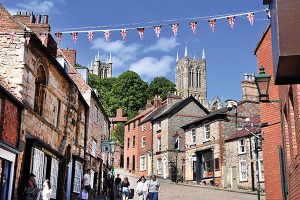
Still hot – approaching midsummer – holiday people are milling around outside the big church – a discussion is underway as to where to go for lunch – the pub 100 yards west is considered too posh and that place they went on Thursday did lasagna and chips for a more than reasonable price – the holiday fella is looking up at the spire – bit pointy, he reckons – other people take photographs on their telephones of the pointy spire, admiring its size and pointiness – you pass the church often but rarely stop for a closer look – time is on your side so you approach the limestone.
Swifts are circling – the stone is hot to the touch – it was cut in the 15th century – relatively local – quarried from the limestone band that runs from beyond the Humber down into Cambridgeshire – for a big project such as this the stone would have been ordered from various sources – there would have been a steady flow of stone deliveries to feed the hungry arms of the masons – everything would have been worked and dressed on site – dozens of hammers pounding dozens of chisels – dust and sweat – the big blocks before you are sparrow-pecked with tool marks – the polka dot pattern is at least 500 years old – you follow it along, the consistency of the chisel strikes suggests this is all the work of the same mason.
You are following the stonework but are interrupted by a bench – the bench has been dedicated to a local worthy who died 30 years ago – a very warm looking gentleman sits down and sighs – he takes a long glug of recently purchased water and unwraps a pair of humble tuna and sweetcorn sandwiches – very refreshing on a day as hot as today – 28 and climbing – you allow the gentleman some space to enjoy his meal deal and step back to regard the grotesques.
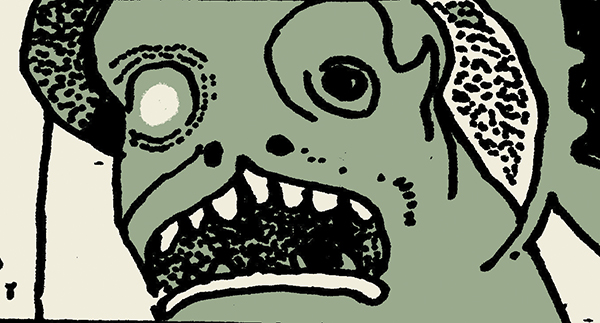
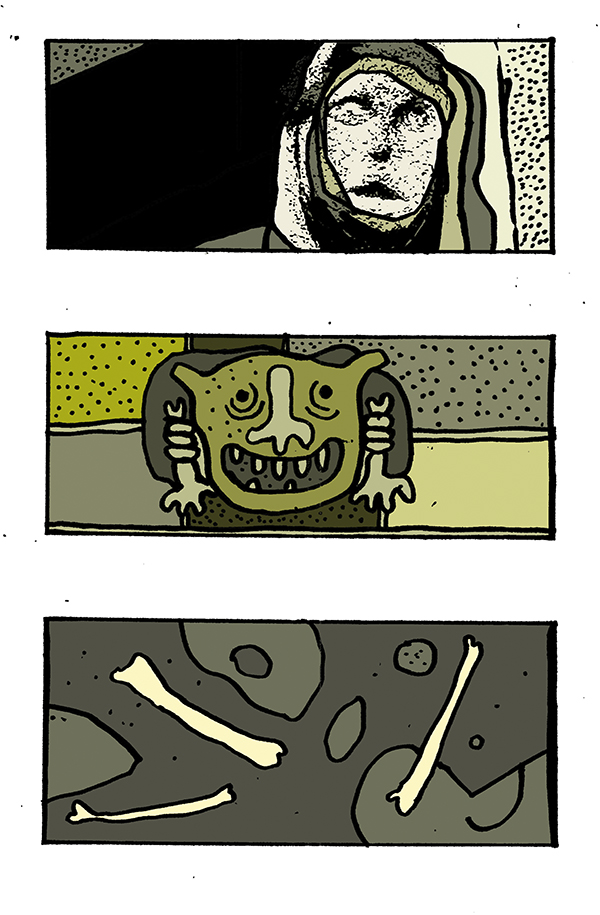
There are many faces – gurning, leering, goblin faces – some are in better nick than others – time and weather have done their things – eyes, a hollow nose, erosion – an owl-faced beasty with gob open with sharp teeth – a cross-eyed troll, similar to Shrek, appears to be voiding itself – some gonk-nosed goon screaming endlessly down a drainpipe – tourist types regard a blue plaque that marks a Tudor atrocity – hung, drawn and quartered he says – that’s not very nice – you follow the edge of the church – it’s open for tours and teas – it is tempting – someone is thrashing out what sounds as though it could be the keyboard solo from ‘Riders on the Storm’ on the massive church organ – a pair of saintly faces carved by the doors – they look Victorian, pious, dull – James Fowler did some work here in the 19th century and you can tell – there’s no mischief in Fowler – you continue on, looking for signs of the older, weirder craftsmanship – you turn north and are in shade.
Good hunting
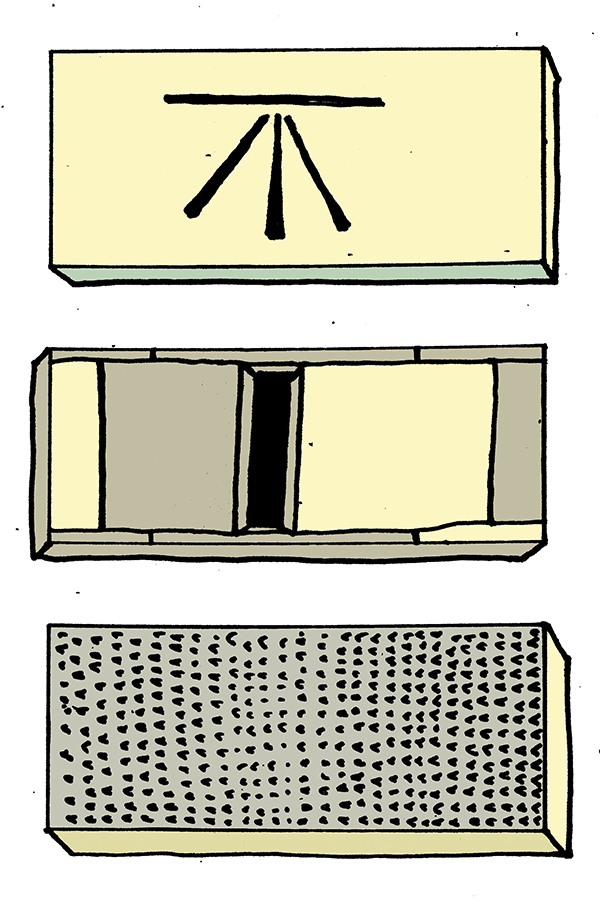
The west end of the church is dominated by, yes, the pointy spire – but you ignore it – the stone on this side is greener, damper even – out of direct sunlight – an Ordnance Survey benchmark at shin height – a deep cut arrow below a horizontal line – it draws your eyes up – a tiny black window set into the stone – ah – a leper squint – a peephole for the afflicted, so that they might receive the sacrament without contact – it is a strange and sad detail – there is no light coming from within the tiny aperture.
The shrill cry of a bird – look up – a falcon – peregrines nest at the base of the spire – three wheel slowly on the thermals – you move toward the north side of the church – your boots crunch – the base of the tower is bordered with loose flint – quickly you notice a hag stone, then another, then a third – the holed flint has many uses – projection against the dark, a ward against unseen forces – you pocket one, as is your custom – look – a bone – at first this is thought to be the remnants of some late-night fried chicken feast – no, the bone is too small, too fine – another kind of bird, some sort of mammal – look – there – half a skull – rat, possibly – there are nearly as many bones as flints – here then is the debris of the peregrines feasting – a claw, a beak, flesh stripped and dropped from on high – a spoil heap, a record of good hunting – onward – into the full shade of the north side – cooler – glum, even – the northern edge of the church is for the lost and the sinister – over in the furthest corner is another memorial bench – occupied – a pair of teenage goths bashfully sit, sharing a large bag of maize based onion rings – you leave them to it.
Jurassic connection
As you turn, there is a face – a foot higher than you – head positioned as if looking over your shoulder toward the north – her expression is one of sorrow, horror even – she is young – in her 20s – cowed, afraid – the carving is simple but incredibly effective – you’ve seen her before, elsewhere, by the door of a church in the Wolds – Biscathorpe perhaps – you make a note, a sketch but it doesn’t do her justice – the blocks around her are full of fossils – all this limestone was a Jurassic seabed – 200 million years – a shell that once was a home – your fingers trace the swirl – the goths trudge past and enquire as to what you are doing – you explain and point this out – see, this whole church was once the bottom of an ocean and it took the skill of one mason 500 years ago to summon this woman’s face from it – the goths agree that this is cool and trudge on – the falcons above are calling – loud – excited – you can’t see them – the church organ has switched to a frilly version of Blake’s ‘Jerusalem’ – you step back to see if you can see the birds, using the tower to obscure the sun – you squint – looking hard – something – a freshly cleaned bone falls from the sky.
We Recommend



Never miss a copy!
Big savings when you take out a subscription.
Problem displaying Facebook posts. Backup cache in use.
Click to show error