

The shoot day dog
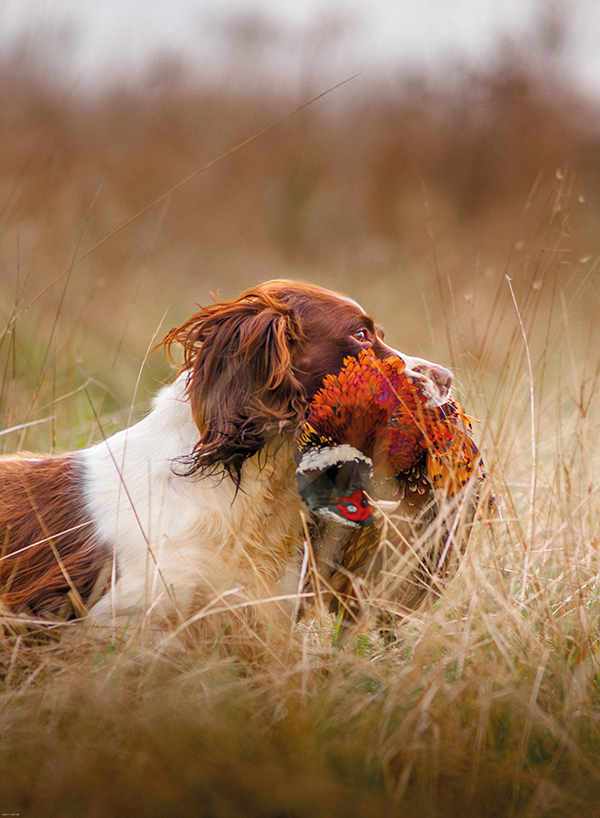
Matt Limb OBE looks at the role and tasks of working gundogs on a traditional day’s driven shooting.
As autumn settles across the countryside, the shooting season becomes part of the rural calendar once again.
Months of work by the gamekeeper and his team, much of it beginning in the spring, are now about to be tested as guns, beaters, pickers-up and their dogs come together for the day. As one drive draws to a close, the whistle sounds and, for a moment, there is a pause. The guns fall silent, birds still circle away in the distance and then, almost at once, the dogs begin their work.
Some have spent the drive moving through cover with the beating line, pushing birds steadily forward. Others have waited beside the guns, watching and marking where birds have fallen.
Further back, the picking-up teams are moving into place, watching carefully. To the casual observer they are all simply gundogs, but on a shoot day they can be carrying out very different tasks.
For anyone unfamiliar with a shoot day, the dogs can easily look like companions rather than part of the working team – much of the day depends upon them.
The shoot day is divided into several drives, often as many as six. During each drive, beaters move forward in a carefully organised line, flushing birds towards the waiting guns. The dogs work within this structure, either hunting with the beating line, waiting beside a gun or watching from further back with the picking-up team.
On a scent
What makes them so valuable is something no person or machine can properly replace: the dog’s nose.
A gundog can find scent where the human eye sees nothing, follow a bird through grass or dense cover and locate wounded game that may have travelled well beyond where it was last seen. The start of a drive is signalled by the beating line beginning to move forward. Beaters spread across the ground and advance steadily through woodland, cover crops, hedgerows or rough ground, some with their dogs working around them to find and flush birds ahead.
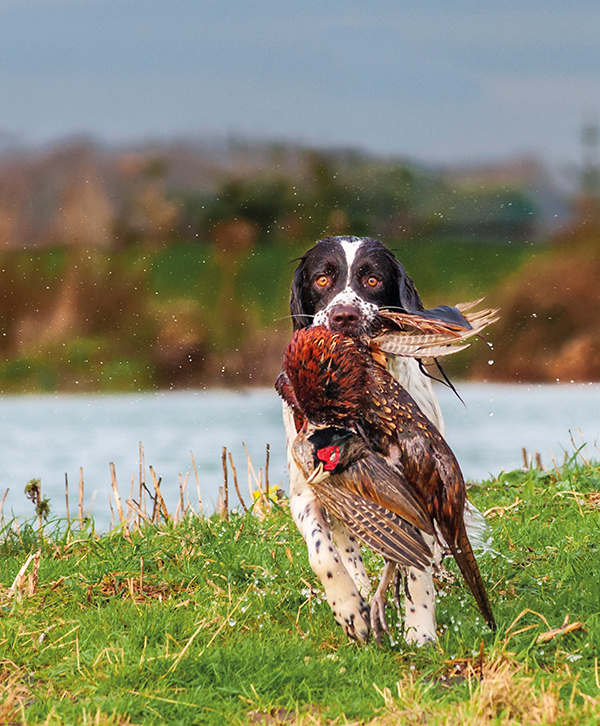
Spaniels are the gundogs I know best, having lived and worked around them for much of my life. Their natural ability to hunt, use scent and work through thick cover makes them particularly effective in the beating line.
But enthusiasm alone is not enough. It is essential that the dogs remain under control and do not push too far ahead – flushing birds too early in a drive can be a disaster.
Much of that control will have been established during the months of preparation before the season, so that amid the excitement, scent and movement of the day the dog will still respond to its handler.
Working from side to side, or quartering the ground, the dogs use the wind and their noses to locate birds sitting tightly in cover and push them forward. Yet spaniels should not be thought of only as beating dogs. Their hunting ability also makes them valuable to many picking-up teams, particularly when birds have fallen into thick cover.
Role of the peg dog
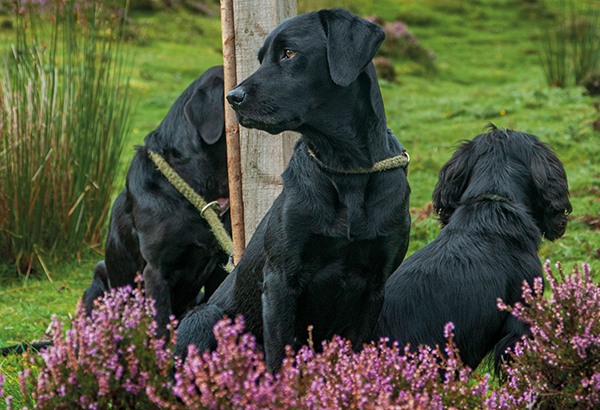
Not every dog on a shoot day is moving through cover. Some will spend much of a drive sitting quietly beside a gun at the peg, watching what is happening and waiting until they are needed.
For a peg dog, being still, quiet and steady is vital. It must remain composed while birds are flying and shots are being fired, marking where a bird has fallen, remembering that point and waiting until it is sent.
Labradors are particularly common in this role, although other breeds can do it equally well. To the inexperienced eye, a dog sitting still may appear to be doing very little. In reality, it may be watching several birds in flight, marking where they fall and waiting patiently for a single command.
Only when the drive has finished, signalled by the whistle, will the peg dogs normally be slipped and allowed to work.
For many guns, one of the greatest rewards of the day is seeing their own dog go out and pick a bird they have shot. Once sent, the dog may need to cross open ground, negotiate hedges or ditches and use both sight and scent to locate the bird before bringing it back.
Picking up
Finally, the picker-up works behind the line of guns, frequently with one or more dogs, often at some distance, watching where shot birds fall and recovering them once the drive has finished. It is a role that depends on observation, an experienced eye and the ability of the dogs to search ground that may be difficult to cover on foot.
A picker-up will normally give a gun with his own dog space to retrieve the birds he has marked. Equally, it is not unusual for a gun to wave a picker-up over for help when a bird has fallen but cannot be found.
Some birds will lie in the open. Others may fall into woodland, hedgerows, ditches or thick cover and quickly disappear from sight.
A wounded bird may travel some distance after landing and this can be one of the few occasions when a picker-up will slip a dog during the drive, rather than wait for the whistle. But it must be done without disturbing the drive still taking place.
Picking-up is therefore about far more than simply collecting birds after the shooting has stopped. Most importantly, wounded birds need to be found quickly so they can be dealt with humanely.
Labradors are a familiar sight with picking-up teams, although many handlers favour spaniels or work a combination of breeds.
By now the different jobs carried out by gundogs should be clear, and the breeds themselves reflect those differences. Labradors and spaniels remain among the most familiar dogs on a shoot day, but they are far from the only breeds working in the field.
Working abilities
Some dogs have been developed to work more widely across open ground. Setters and pointers use scent to locate game and then indicate where it lies by pointing, while the continental Hunt, Point, Retrieve breeds, usually known simply as HPRs, were bred to combine several working abilities in one dog.
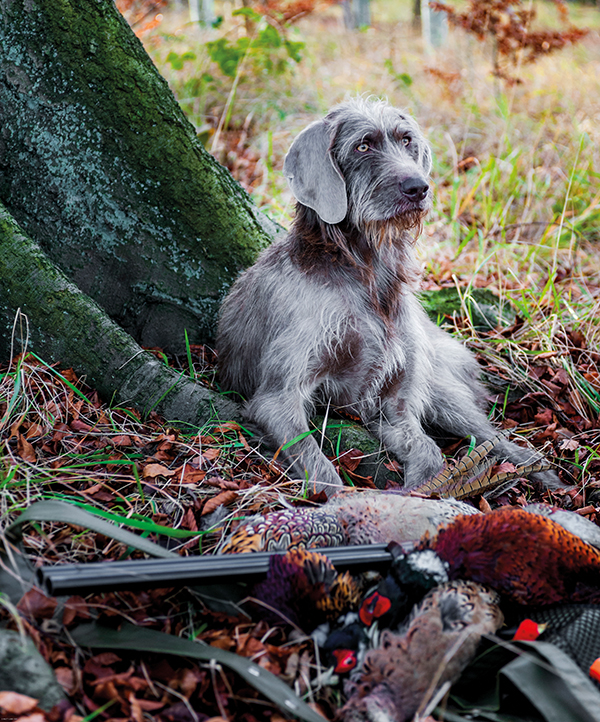
Of all the HPR breeds I have seen working, one that has caught my eye several times is the Slovakian Rough Haired Pointer. One of its strengths is the ability to range out and follow game over considerable distances, something at which HPRs can excel.
They are less naturally suited to forcing their way through dense, rough cover, where a spaniel will often have the advantage.
So, there is no single ideal gundog for every job. A spaniel may excel in thick cover, a Labrador at marking and retrieving, while an HPR may come into its own when game needs to be located over open ground or followed over distance.
What links all these different roles is the close working relationship between dog and handler. The handler reads the ground, the wind and the progress of the drive, while the dog brings its nose, instinct and ability to work where a person cannot.
Often that understanding is almost unspoken, expressed through little more than a whistle, a hand signal or the way a dog checks back towards its handler.
There is also a simple satisfaction in watching your own dog work well and then having it beside you when the work pauses. A piece of pork pie shared at elevenses or a corner of sandwich at lunch may seem a small thing, but it reflects a much older tradition of dogs being part of the shoot day, not simply brought out when there is work to be done.
For many people unfamiliar with shooting, the familiar image of a gundog is simply that of a dog sent to retrieve a bird once it has been shot. In reality, that is only the most visible part of what many dogs contribute during the day.
By the time a bird is retrieved, dogs may already have helped find and move game through cover, watched and marked where birds have fallen, or worked with a picking-up team away from the line of guns. Much of this happens quietly, often out of sight.
Perhaps the clearest example of why the dog matters comes when a wounded bird disappears into cover or runs from the place where it fell.
Here, the dog’s nose becomes something no person or machine can properly replace, following scent and locating game that might otherwise be lost.
Retrieving may be the moment most people notice, but it is only one part of the much wider role played by the working gundog.
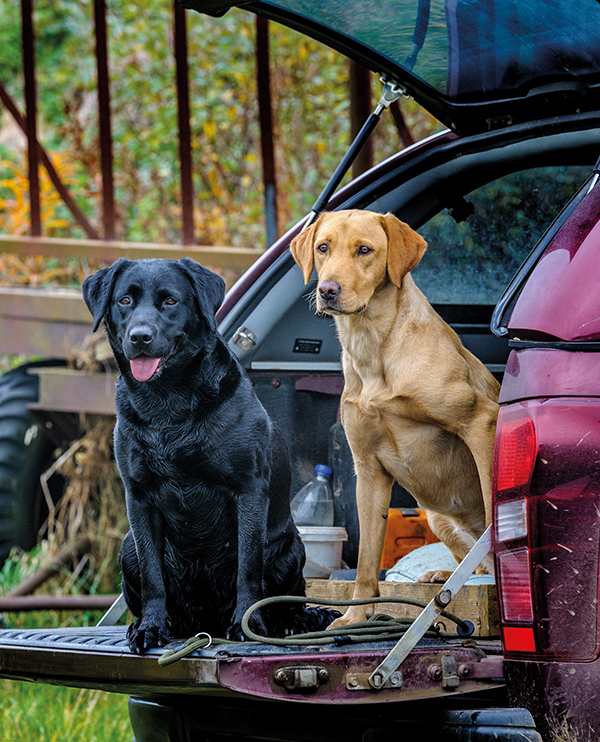
For many of us, the working relationship with a dog does not begin and end in the shooting field. These dogs are more than pets; they are working companions. The same dog that spends the day hunting, marking or retrieving will travel home in the back of the vehicle, wait by the door, lie at our feet and remain part of everyday family life. That is perhaps what makes the working gundog such a natural and enduring part of country life. It is both a practical partner and a companion, sharing the hard work, the quiet moments and the traditions that surround a day in the field.
They are there because they can do things we cannot and because, for generations, people and dogs have worked together in a partnership that remains every bit as relevant today.
We Recommend


Never miss a copy!
Big savings when you take out a subscription.
Today’s the day for the Springfields Designer Outlet & Leisure Autumn Fireworks Display. This is your last chance to buy tickets, so don’t delay! springfieldsoutlet.co.uk/events/fireworks2026/