

Telltale signs
Author Talks
Saturday 10th October
Queen’s Park Community Hub, Lincoln LN5 8EW 2pm-3.30pm
Rory Waterman will be the guest of Lincolnshire Family History Society. Come along in person or request a Teams link. Free to attend. £1 donations to help cover speaker costs.
Tracey Fairhurst 07941 245322, lincolnbranch@lincolnshirefhs.org.uk
Wednesday 14th October
St Hugh’s Hall, Monks Road Lincoln LN2 5AQ, 7.30pm-9pm
Rory will be discussing Markby St Peter’s thatched church and the folklore associated with it. In partnership with SLHA
Words by:
Yusef Sayed
Featured in:
October 2026
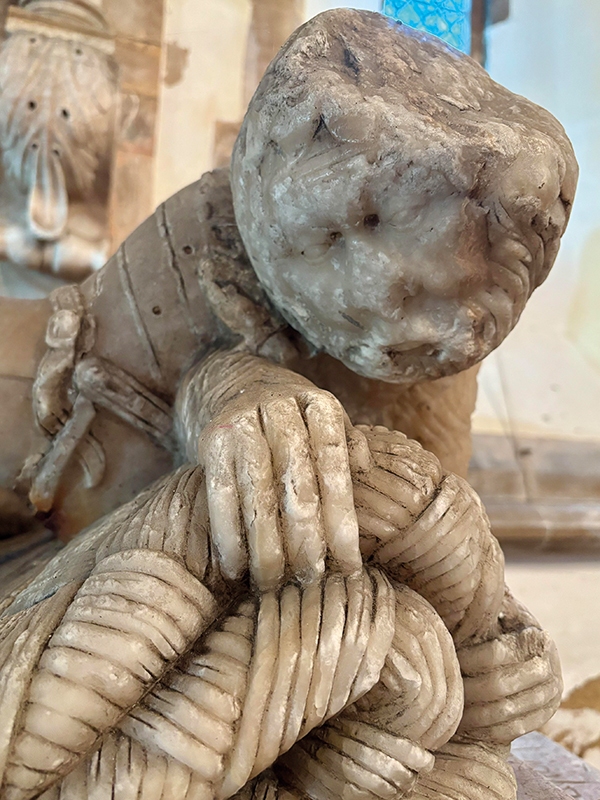
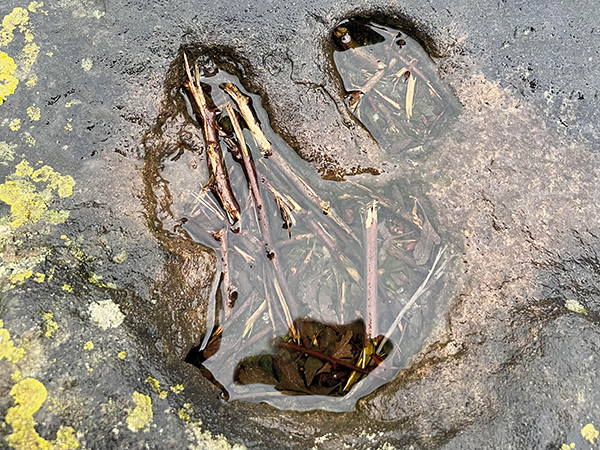
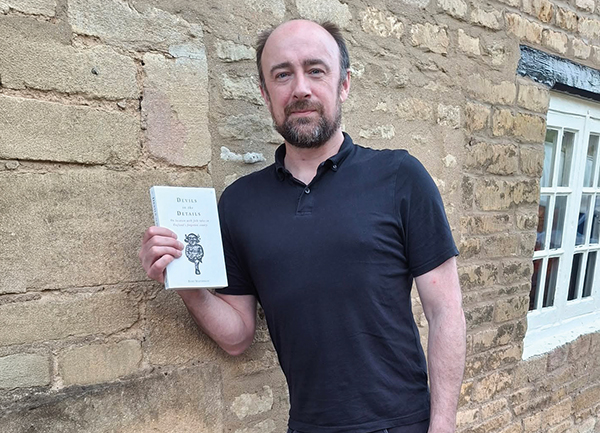
A new book explores the curious origins and contemporary appeal of Lincolnshire’s folk tales. Yusef Sayed spoke with author Rory Waterman about his unique survey of locations associated with these narratives, and the connection between storytelling and home.
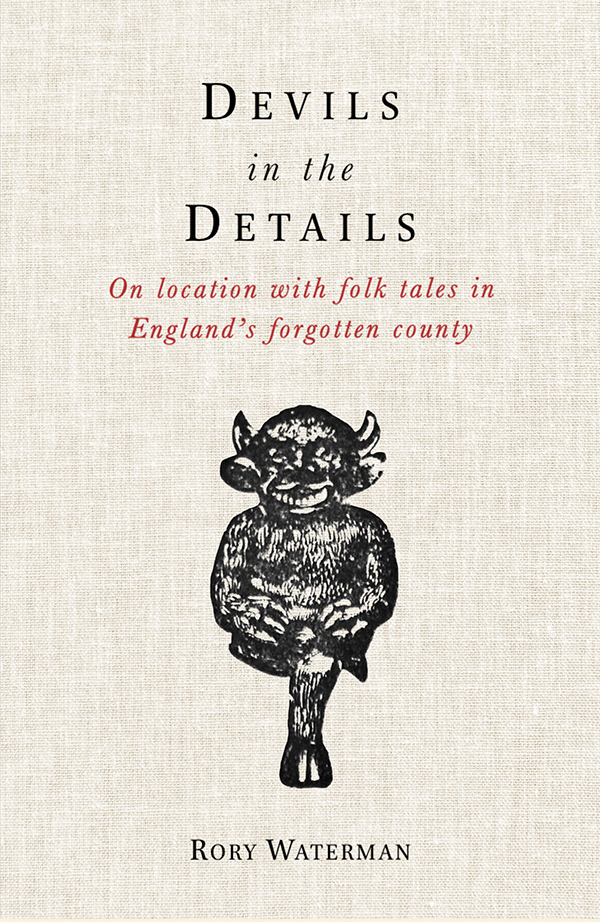
Rory Waterman is an acclaimed poet and Professor of Creative Writing and Modern Literature at Nottingham Trent University. His latest publication is the culmination of an Arts and Humanities Research Council funded project, launched in 2024, focusing on Lincolnshire’s folk tales – but it also reflects a lifelong interest.
From Byard’s Leap to Yallery Brown, the Dragonby Dragon to the Wild Man of Stainfield, Devils in the Details explores the origins of stories that are well-known throughout the county, as well as those that might be unfamiliar to readers, or even widely forgotten. Waterman is a passionate advocate for the county’s history, the book driven in part by the widespread absence of Lincolnshire from other reputable compendiums of British folk tales.
He says: “I hoped calling it the ‘forgotten county’ wouldn’t cause offence – because it is. It’s really strange to me because it’s a great county. One thing it has that’s an advantage, it’s very big and much more varied than people realise.
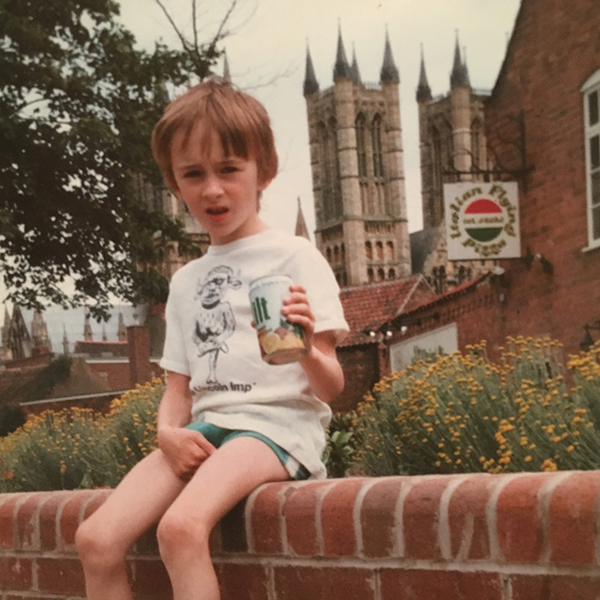
“I’ve wanted to write about Lincolnshire, about growing up here – the book ends with stuff about that – and about a lot of these stories. I remember my nan telling me about the phrase associated with Bardney: ‘Were you born in a barn? Shut that door!’ She liked that, she knew I’d like it. I remember being fascinated by the Lincoln Imp and the story. Obviously, it wasn’t true but it was fun.
“And inventing my own stories. I’ve always been a writer.”
Spread the word
Following the legacies of the writers who preceded him, notably Ethel Rudkin, Mabel Peacock, and more recently Maureen James, Waterman has established himself as our contemporary authority on the subject, confirmed not only by the depth and critical engagement shown in Devils in the Details but also his enthusiasm for sharing his knowledge, and desire for this folklore to be re-energised in new forms. He writes: ‘Myths are supple: they’ll reconstitute in new forms in the flap of a jaw and the blink of an eye.’
Each chapter focuses on a different tale, beginning with the most recognisable, that of the Lincoln Imp. From the outset, Waterman brings to light little-known aspects of history, beyond the typical Cathedral tour blurb – as here with a narrative that appeared in pamphlet form in 1925, written by Cecil Dye, where the carving of the imp plays a key part in a love triangle.
“It became an absolute obsession for eighteen months,” says Waterman.
“I didn’t write the chapters in order initially, and I did that intentionally. I wanted each chapter to feel like its own little world. But they do enact a kind of journey, you could dot-to-dot them and make a route that starts in Lincoln, goes north, goes round the coast, goes south, then comes back up towards Lincoln again.”
Waterman wears his erudition lightly, and draws the reader in with his first-hand descriptions of the places that are central to the stories featured. Born in Belfast, Waterman spent his childhood and teens in Nocton and frequently returns to his home county.
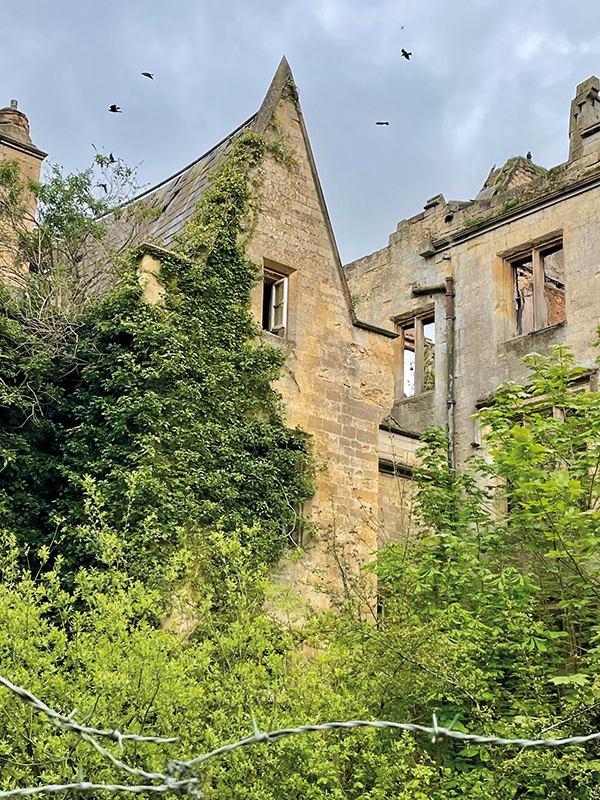
Far from unadulterated enthusiasm, Waterman takes us to the sometime non-descript places off the beaten tracks where we are confronted with disenchanting realities: overgrown or derelict patches of land, buildings in ruin, or dead ends of other sorts. But all along he conveys the special quality of stories when they have some tangible link to an object or place.
Likewise, Waterman has little patience for lazy variants, or those who try to claim these shared stories as their own, as with the ghost of the Metheringham Lass, said to flag down motorists near to the former airbase, for help following a fateful crash with her lover.
No dreary academic undertaking, destined to sit awaiting citation in other obscure dissertations, Devils in the Details blends travel writing, scholarly interest and memoir with a winning sense of humour. Still, Waterman recommends that the endnotes should not be skipped altogether, where there is added interest and asides that will put a smile on the reader’s face.
“Early on, there’s one about Duncan Grant’s scandalous murals at Lincoln Cathedral, depicting his lover as Jesus and himself as St Blaise.”
Dark and light
As the book’s title suggests, as well as the fascinating details that Waterman uncovers, there is an enduring fascination with the macabre, the subversive, the profane that runs through these stories. From the witch who digs her claws into the heroic horse Byard, to the body of Mark Kirkham’s killer, Tom Otter, left to hang from a gibbet – not to mention the likely influence of opium on visions of boggarts and other small spirits – the tales are a way of channelling disruptive and repressed feelings and fears. ‘[A]s a rule of thumb,’ he writes, ‘goodliness does not a good folk tale make.’
“There was an effort in a lot of countries, at a time of growing national myth, nationalisms, to catalogue folk tales – we never had that here, which is a bit odd, because of England’s history being quite nationalistic, in ways I don’t necessarily like much, but it’s surprising. Lincolnshire got left off the tourism map too, where guides could tell you a tale and get a tip, so they don’t crop up in the narratives of travellers in the nineteenth century.
“Another way was the local collector. In England that generally tended to be either a man of the cloth, or a posh lady who has got nothing better to do. Now, if you are a farm labourer and you have some quite saucy tales, you might have decided to self-censor a bit. So there is this class separation too.”
Shared experiences
Throughout the AHRC-funded Lincolnshire Folk Tales: Origins, Legacies, Connections, Futures project, supported by the research fellow Anna Milon and a number of talented writers and community groups, Waterman hosted workshops for all ages, including a visit to his former primary school. He says the level of engagement with Lincolnshire’s folk tales was all he could have hoped for.
“I did school events. Adverse Camber put those together, we had a storyteller, Pyn Stockman, who is brilliant, who went into three primary schools including my old primary school at Dunston, one in Skegness, and one in Brigg. The kids were great. I went to the performances at the end and the Q&As with the kids.
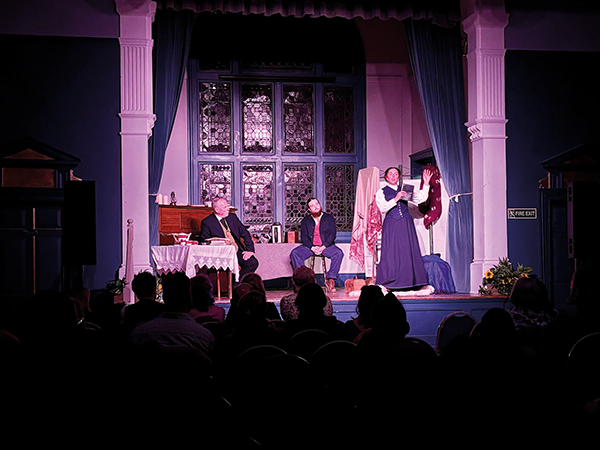
“We also did events with Heritage Lincolnshire, with musician Mossy Christian, and Kathy and Simon from Time Will Tell Theatre, who would do a show focused on folk tales in that particular town, or area. Loads of people got in touch, the website really took off, getting thousands of hits a month.
Waterman adds: “At Mrs Smith’s Cottage, a brilliant museum [in Navenby], we ran what we called ‘Boggart Surgeries’, where people could come and talk about the project, or talk about story versions they’d encountered. A guy came along with songs he’d written about Tom Otter.
“A lot of people got in touch with me during the project, to talk about stories local to them, many times ‘memorates’ – not fully-fledged ghost tales. I had to draw a line as to what counted as a folk tale. There has to be a narrative. The word ‘tale’ matters as much as ‘folk’. They belong to everyone, you can do your version and it’s just as legitimate as anyone else’s. There has to be a story. They were my rules.”
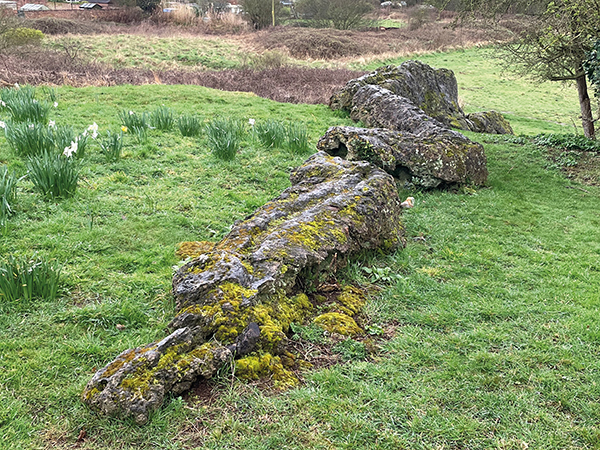
A previous publication, 2025’s Lincolnshire Folk Tales Reimagined, collected new interpretations of these stories in verse and prose, by writers with a strong connection to the county. Waterman also contributed his own version of Yallery Brown – about the consequences of a bargain struck with a strange creature trapped under a rock – to his most recent poetry book, Come Here To This Gate.
Heart of the matter
After all the murk, magic and mythmaking, the book ends on a poignant and moving note, as Waterman describes the emotional power that one tale, ‘The witches of summer Poppleton’, dreamed up for him by his own mum, has had on his life, spurring his interest in storytelling.
After such an extended project and tireless trekking across the county in recent years, Waterman is certainly not done with Lincolnshire’s folk tales, or his home county. He will continue to learn, support others wishing to study and revitalise these narratives, and draw upon their imagery and backstories in future writing.
He says: “I love traditions, I love the way those stories developed, the way stories come into being, often kids telling each other things. I think they’re part of what we’re made of – and the county means a lot to me.
“I am intending to do another project about folklore in Lincolnshire in the next couple of years. I’ll always be interested in this stuff.”
With thanks to Noah Thorpe. Photographs courtesy of Rory Waterman
Devils in the Details is published by Five Leaves Publications, price £12.99
We Recommend


Never miss a copy!
Big savings when you take out a subscription.
Problem displaying Facebook posts. Backup cache in use.
Click to show error