

In tune with nature
Bill Meek takes time out to listen to seasonal bird song.
With birdsong being such an essential part of our Lincolnshire spring and summer soundscape, it is interesting to speculate “why do so few people seem to know their common bird songs?”
Some of course may not have the slightest interest in such things, but many more, one suspects, just think that the effort required to learn them is too great.
This is a shame, as being able to recognise 20 or so bird species by their songs can transform a spring walk to the point that a rewarding new ecological understanding emerges, and 40 would see you right in just about any situation.
It is almost always male birds that sing, and the purpose of course is to establish territories and attract mates, with the strongest and most skillful singers displaying superior ‘fitness’ to breed.
The bird’s sound-producing organ is called the syrinx – a double structure, each half of which can be manipulated independently to create the more complex songs. Efficient use of air passing through the syrinx ensures power, and some birds can sing while inhaling as well as exhaling.
Summer songs
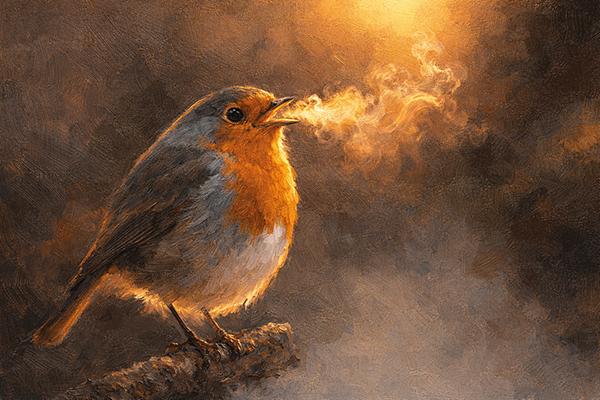
The period of the year during which all birds sing together is relatively short. Our resident species might start in March, joined on arrival in April by the migrant summer visitors. But by August all is mostly again quiet except for the wistful Robin, the only species which habitually sings throughout the year.
Many birdsongs are simple and immutable – they never alter. Others are more varied and musical, and have to be identified by a combination of pitch, timbre and pace, which, apart from a couple of tricky species pairs, is not as hard as it sounds. The robin and blackbird are two such species, which are so common that once learned they account for a large slab of the soundscapes of town and country alike.
Once these two are known, songs that are different tend to stand out.
Among the next group to learn is the song thrush, whose strident figures are always repeated, and the chaffinch, whose song always ends with a ‘sneeze’. For such a tiny bird, the common wren has a song of extraordinary power whose relatively unchanging series of ringing metallic notes and trills are easily both heard and learned.
Of our summer visitors, the songs of blackcap, chiffchaff and willow warbler are common enough to make it worthwhile learning their songs, although the first of these is very similar to the subtly more fluid and rippling song of the garden warbler, which is only slightly less common.
On farmland you should hear the scratchy notes of the whitethroat from any tangled hedgerow or brambly bank, and reed and sedge warblers may provide a relentless summer soundtrack wherever dykes and other wetlands have vegetated fringes. Some songs may be learned by popular mnemonics: a great tit may sing “teacher teacher”, and a Yellowhammer “a little bit of bread and no cheese”.
To find out more, check out the numerous websites and apps to help with learning British bird songs.
We Recommend






Never miss a copy!
Big savings when you take out a subscription.
Problem displaying Facebook posts. Backup cache in use.
Click to show error