

Gainsborough’s geographer
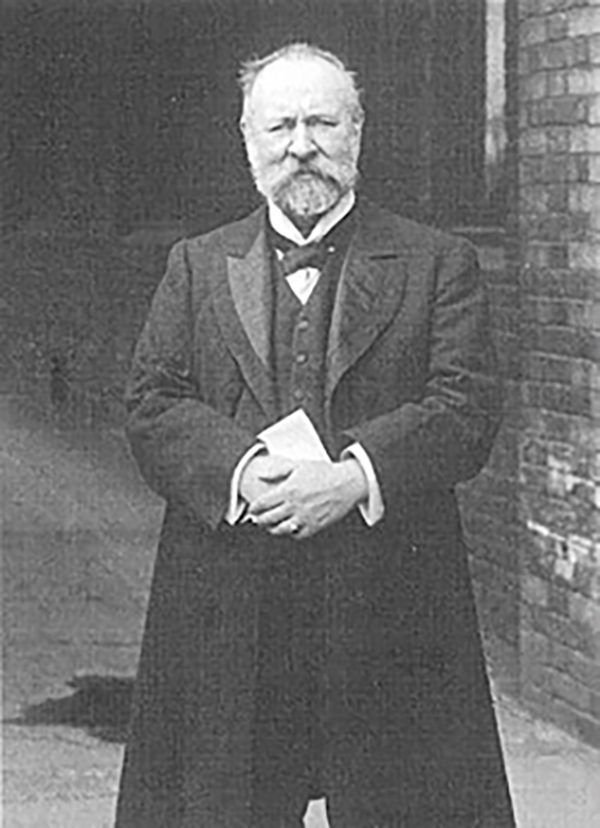
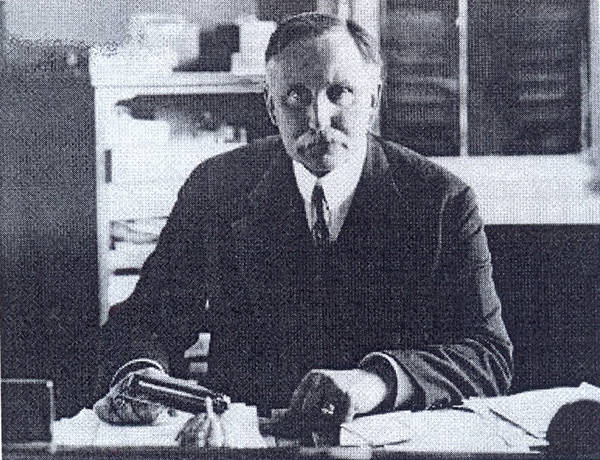
Dene Bebbington looks back at the story of Halford Mackinder, the father of geography.
In your schooldays did you struggle to memorise things like capital cities taught in geography class? Whether you enjoyed or disliked those lessons, we can thank a man born in Gainsborough for turning geography into a separate discipline.
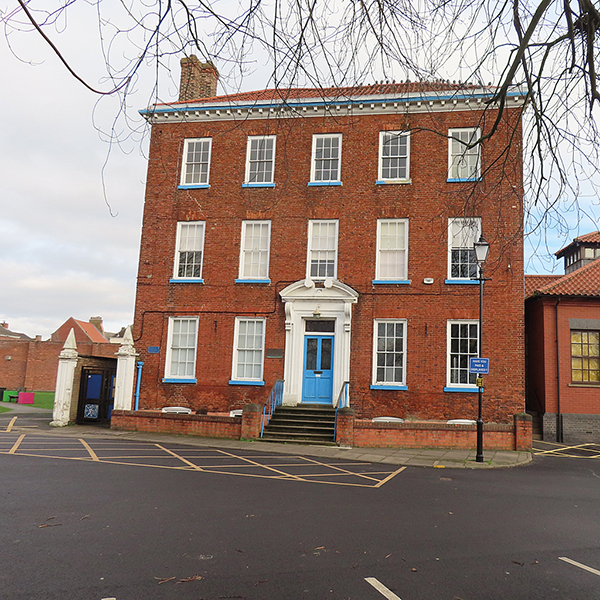
Take a walk around the town and you’ll see various reminders of history in its old buildings, then when you reach Elswitha Hall, you’ve found the birthplace of Halford Mackinder, the father of geography.
Fanny Hewitt, wife of Draper Mackinder, gave birth to a son the couple named Halford in February 1861. Draper was a doctor and the family did sufficiently well in the following years that they could afford to buy the large town house and employ a live-in servant.
In contrast to his father, who by that time felt disinclined to travel outside Lincolnshire, the young Mackinder would transform our view of the world and lead an expedition to Mount Kenya.
At the age of 13, he enrolled in Epsom College and there became friends with another Lincolnshire boy, Thomas Walker. Before going to Epsom he’d already displayed an interest in geography, having precociously given presentations about Australia.
At Epsom Mackinder got stuck into school life. While performing well academically he wrote a piece for the school magazine titled ‘A Glimpse of A.D. 1950’, which imagined electric trains travelling through a channel tunnel – he had the right futuristic insight but the timescale was off by a few decades!
Mackinder’s academic potential was further borne out when he gained a studentship at Christ Church College, Oxford, where he earned degrees in biology and modern history.
In the summer of 1884 after sitting the history degree exams, Mackinder and a friend went on a walking holiday around Europe, which may have been the catalyst for a more ambitious expedition years later.
Today, Mackinder would be called a high-flyer because he then went on to study law and alongside his degree work became president of the college’s Junior Scientific Club.
After graduating from Oxford he worked as a lecturer and barrister. Life at the bar was short-lived since he decided to focus on education and geography, which initially involved giving so-called extension lectures at other towns and cities across England.
Serendipitously, the Royal Geographical Society needed people who could teach geography at degree level and Mackinder proved to be an ideal candidate. Elected to the society in March 1886, he subsequently wrote the paper ‘On the Scope and Methods of Geography’ to be published in the society’s journal.
On a mission
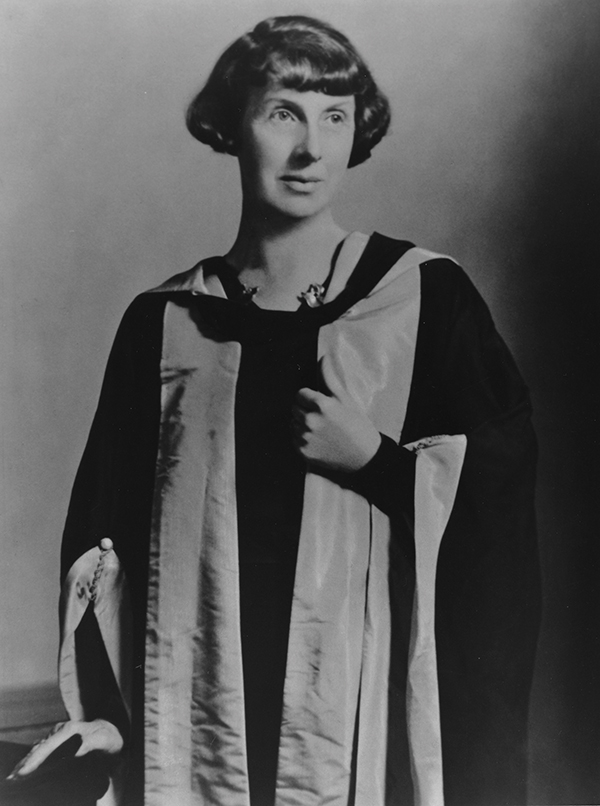
Amidst this busy professional life, Mackinder also found time to court a woman who became his wife. In Manchester, he met Reverend David Ginsburg, who invited him to the family’s Surrey home where he took a romantic interest in one of their daughters, Emilie Catherine – nicknamed Bonnie. The couple married in early 1889 in an elaborate wedding reported on by newspapers, a bit like we see with celebrities today.
Two years later the couple had a son who, sadly, lived less than a day. It’s not known whether Emilie’s emotional and health fallout from this traumatic loss, or Mackinder being busy and away a lot, led to their parting ways at the turn of the century.
Shortly before their separation he embarked on an expedition to Africa, in a scheme that arose from conversations with the Ginsburgs, who too moved in scholarly circles.
Mackinder had a plan to gather information about topography and weather in the area of Mount Kenya, and to collect plant and animal specimens.
The second highest mountain in Africa after Kilimanjaro, Mount Kenya’s highest peak reaches over 17,000ft and is the remains of a long extinct volcano.
Just trekking to the foot of the mountain proved a challenge for the expedition group of around 200 people including porters and guides.
Despite their planning, the mission almost turned into a fiasco. Having made it to a camp at over 10,000ft, a lack of supplies, combined with deserting porters and guides who lost some specimens, made a delaying side trip to obtain food necessary.
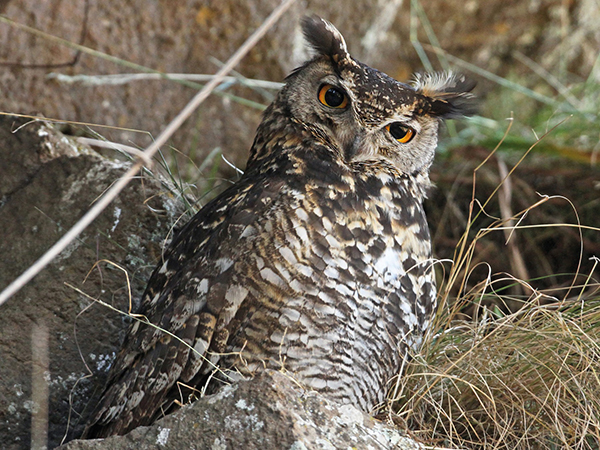
Eventually they made it to one of the mountain’s summits before Mackinder got recalled to England, and upon return he received some adulation, including a new species (later identified as a subspecies) of Cape eagle-owl being named after him: Bubo capensis mackinderi.
Leaving a legacy
Politics beckoned as he first joined the Liberal party, then switched to the Conservative party, before developing the influential geopolitical ‘Heartland Theory’ described in a 1904 paper titled ‘The Geographical Pivot of History’. Later developments of this theory were used in America’s Cold War strategy.
Also one of the founders of the London School of Economics, Mackinder became a lecturer there in 1900 and took over as the school’s director in 1903.
But he didn’t restrict his intellectual energy to academia. In 1900, he tried and failed get elected as a Liberal MP in Warwick and Leamington. Persistence and seeking the right constituency paid off when in 1910 he was elected as a Liberal Unionist MP in Glasgow and held that seat for 12 years.
Busy as ever, Mackinder wrote more books on geography and geopolitics, and in 1920 the Prime Minister appointed him as chairman of the Imperial Shipping Committee that suggested improvements to ships and port facilities on empire routes.
Unfortunately, increasing deafness in old age made it harder for him to accept many speaking invitations.
Mackinder held various prestigious positions yet wasn’t a wealthy man, so after retiring from the shipping committee at age 80, he went to live with his brother and sister-in-law in Dorset. A couple of years before that he’d visited Emilie on the Italian island of Capri and they remained in contact from then on.
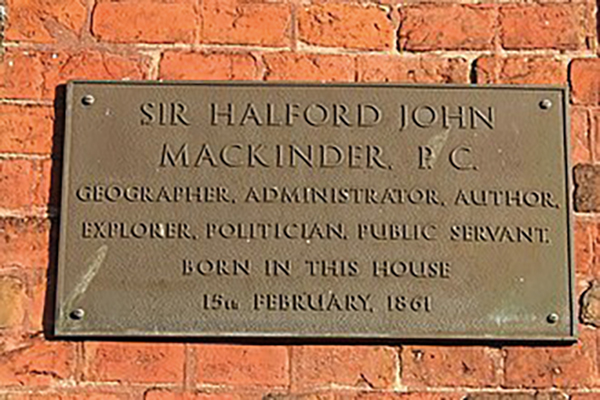
Halford Mackinder died in 1947. His extensive work left a legacy. Gainsborough hasn’t forgotten its gifted son – there’s a plaque commemorating him on Elswitha House.
We Recommend



Never miss a copy!
Big savings when you take out a subscription.
Problem displaying Facebook posts. Backup cache in use.
Click to show error