

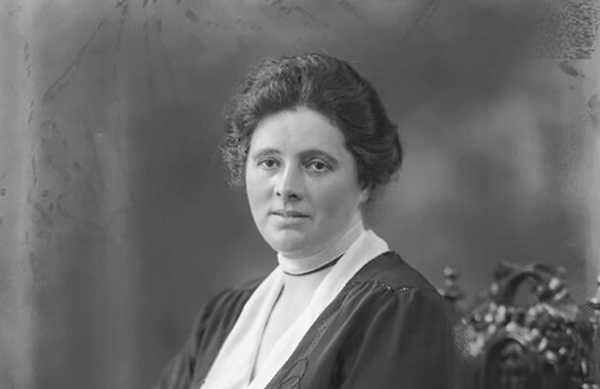
Louth’s first woman in Parliament
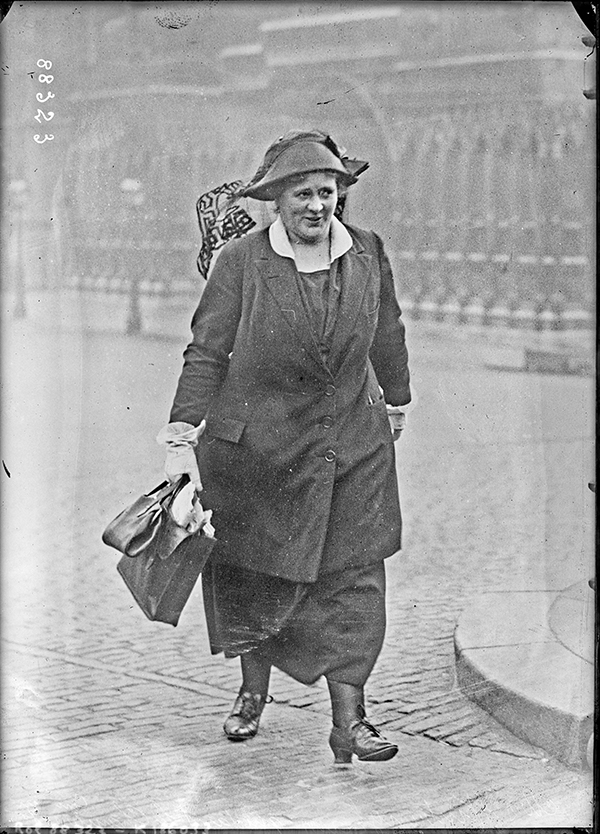
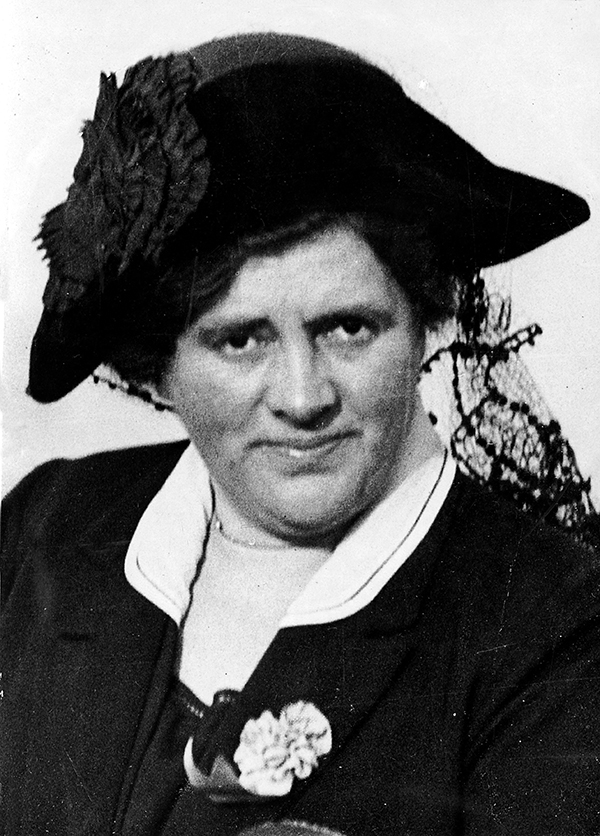
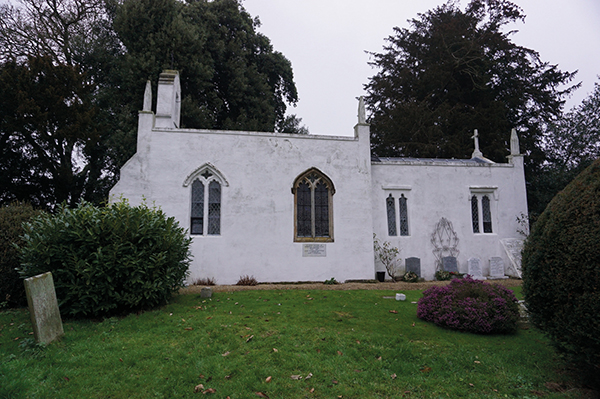
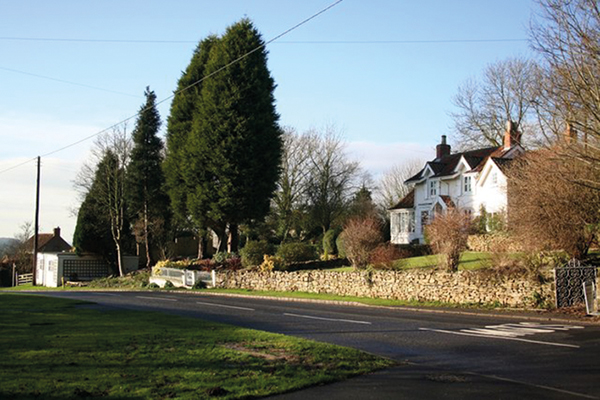
Dene Bebbington looks at the remarkable life and times of Margaret Wintringham MP.
We’re lucky to live in an era when we take for granted being able to vote in elections, and are used to the idea that everyone old enough should have a voice in who governs the country. But for a long time voting in elections was limited not just to men, but only propertied men.
Our ancestors, especially women, had a rough deal in many ways. So how did a Yorkshire lass become Louth’s first woman Member of Parliament?
Born in 1879 near Keighley, Margaret Wintringham grew up to become a teacher and moved to Grimsby where she worked as a school headmistress. While living in the port town she met and then married timber merchant Tom Wintringham in 1903. The wedded couple moved to Little Grimsby Hall near Louth, where she fitted in well with her new family, and according to a niece was a cheerful soul.
As a married woman Margaret eschewed the traditional role of staying home to be consumed with looking after her husband and domestic matters. Taking active roles in public service like serving as a magistrate and on the Grimsby Education Committee, Margaret joined various organisations engaged in social and political matters, the best known of which are the Women’s Institute and Liberal Party.
Liberal candidate
Margaret’s entry into parliamentary politics was the result of tragedy. Her husband Tom had been elected as MP for Louth in 1920, then in the following year he collapsed and died when sat in the House of Commons newspaper room.
She stood as the Liberal candidate in the resulting by-election, yet while still mourning refused to give speeches.
Surprisingly, an epithet of “the silent candidate” didn’t hamper her chances too much since her late husband had been well known in the area.
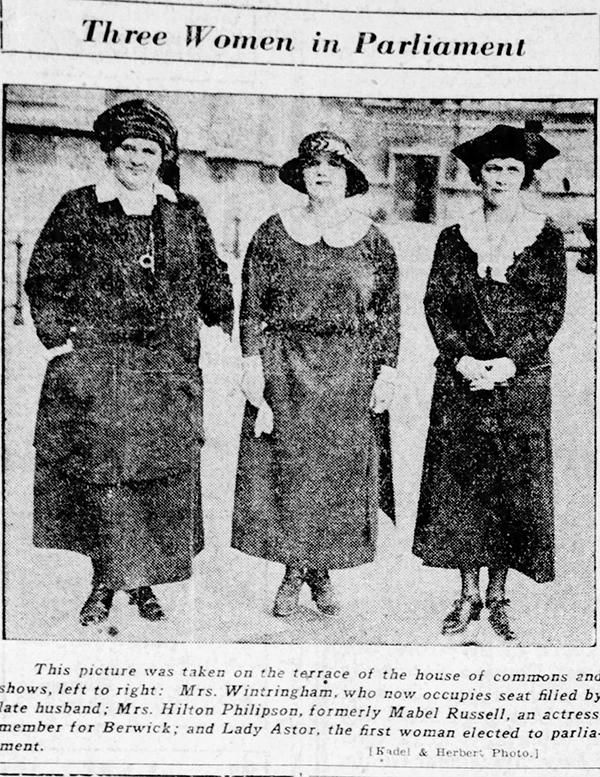
Margaret managed to win by a few hundred votes, thanks to other women speaking on her behalf. This result made her only the second woman to be elected as an MP, and Lincolnshire’s first.
Before that, Conservative candidate Nancy Astor was elected in 1919; a woman Margaret called a “prancing pony” in her campaigning style compared to herself being a “slow old carthorse”.
Despite an interest in children through her teaching job, Margaret and Tom didn’t have any children themselves. The welfare of kids remained one of her concerns, speaking up on issues of child slavery in Hong Kong, and soldiers who should accept responsibility for any offspring they fathered whilst on service overseas.
Women’s Institute
Women’s rights were another one of Margaret’s passions because the voting age of 30 was much older, and disenfranchising, than 21 for men.
She campaigned for equal voting rights, equal pay and scholarships, but her time in Parliament didn’t see a change to the voting age, as she lost her seat in the 1924 general election. It wasn’t until 1928 that women got the same voting age and rights as men without needing to own property.
You may think that the WI is quintessentially English with its old image of ‘Jam and Jerusalem’, but it actually started in Canada and came to England via North Wales in 1915.
Margaret sat on the WI’s Executive Committee even though the institute is non-political, prompting one member to describe her as “our Women’s Institute MP” and she did raise WI issues of interest in Parliament.
Nowadays, it’s difficult to imagine people needing to argue and protest for the right to vote just because they were born as women rather than men.
Though she is not well known like the suffragettes, Margaret Wintringham was a women’s rights campaigner who deserves to be remembered.
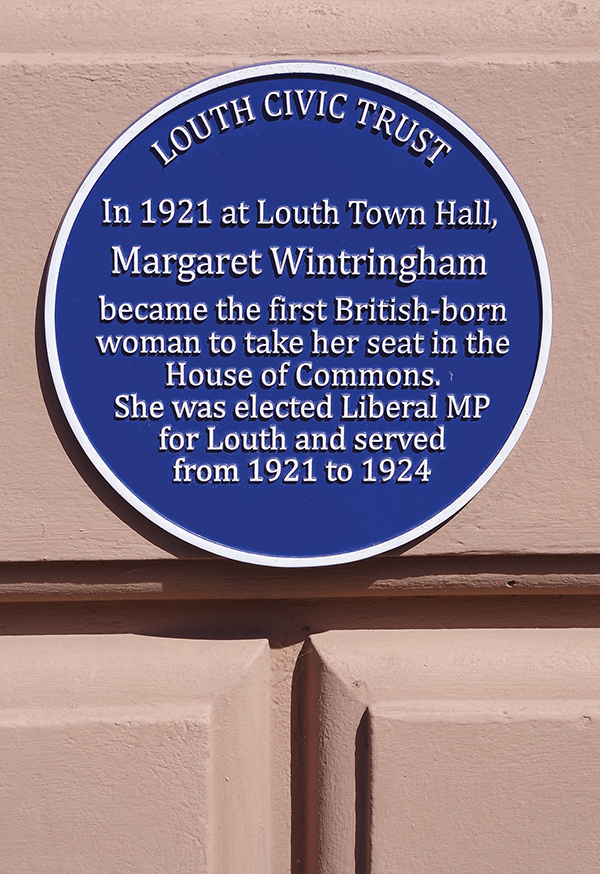
Her achievement as the first British-born woman MP is memorialised on a blue plaque at Louth Town Hall.
The current MP for Louth and Horncastle is a Conservative, yet Margaret would surely have been pleased that the county still elects women.
Main photography: Bassano Ltd
We Recommend


Never miss a copy!
Big savings when you take out a subscription.
Problem displaying Facebook posts. Backup cache in use.
Click to show error