

More than just a game
Matt Limb OBE looks at how the local playing field and sports ground became the centre of the village community.
There can be few greater pleasures as autumn approaches than pulling on a pair of walking boots and heading out into the countryside. Across Lincolnshire, we are fortunate to enjoy miles of public footpaths, quiet lanes and open landscapes that allow us to appreciate the beauty of our county. Yet, important as that access to the countryside undoubtedly is, the true heart of many villages lies somewhere rather different.
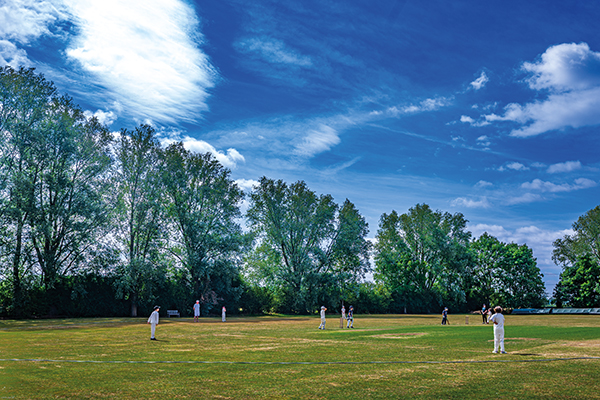
Tucked away behind a hedgerow, beside the village hall, or overlooked by the parish church, the village playing field is often one of the most important places in the community.
It is far more than an expanse of grass marked out for cricket, football, tennis or bowls. It is where children first discover the enjoyment of sport, where friendships are forged, where families spend summer afternoons and where neighbours stop to chat over a cup of tea while watching the action unfold.
These are places that bring together every generation. Youngsters take their first tentative steps onto a sports field, teenagers learn the value of teamwork, adults continue lifelong friendships through sport, while older residents enjoy the opportunity to meet, spectate and remain part of village life. In an age when so much of our communication takes place online, these shared spaces provide something increasingly precious, genuine face-to-face contact.
Often alongside the village hall, the village sports field remains one of rural Britain’s greatest community assets.
Life lessons
While modern city sports centres have their place, they cannot replicate the unique role played by these green spaces at the centre of village life.
They are places where communities gather, traditions are passed from one generation to the next and the social fabric of the village is quietly strengthened, week after week and season after season.
The sports themselves may differ, whether cricket, football, tennis, bowls or any number of other activities, but the benefits remain remarkably similar.
Regardless of age, taking part encourages people to be active, challenge themselves and become part of something bigger than themselves.
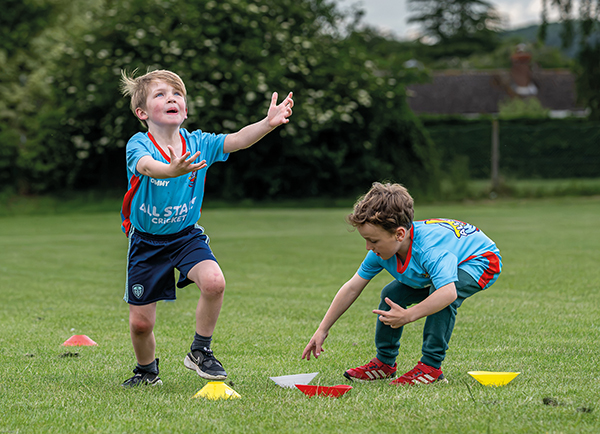
For young people especially, the village sports field provides some of life’s earliest and most valuable lessons. It is here they learn teamwork, discipline and resilience, discovering how to cope with both success and disappointment while building confidence that often extends far beyond the boundary of the playing field.
For a few, those first matches may lead to county, regional or even national honours. For most, however, the greatest reward is a lifelong love of local sport and the sense of belonging that comes from being part of a club.
Village sport also provides an important link between generations. Parents introduce their children to the sports they once played, while grandparents increasingly find themselves doing the same.
One bowls club spoke of grandparents bringing their grandchildren onto the green, introducing younger family members to a sport once unfairly regarded as being only for older people.
It is a reminder that while village sport continues to evolve, its greatest strength lies in bringing people of all ages together.
Of course, none of this happens by accident. There is no magic dust sprinkled across a village playing field in spring that somehow produces the immaculate cricket square of midsummer or the well-marked football pitch ready for the first match of the season.
Behind the scenes
Behind every thriving sports ground are countless hours of hard work, much of it undertaken quietly and, often, entirely unpaid.
Every village seems to have its own groundsman. Typically, the first to arrive and the last to leave, he takes immense pride in his work and pursues perfection with almost pin-point determination.
Offer to lend a hand and you may well be politely, but firmly, told that he has his own way of doing things. Yet, despite the occasional grumble about the endless mowing, rolling, marking out and repairing, he will be back again the following week, ensuring everything is ready for the next round of village sport. His reward is rarely recognition, but simply seeing others enjoy the facilities he has helped create.
The same can be said of the volunteers who look after the adjoining village hall or pavilion. While players and spectators arrive for the day’s sport, someone has already unlocked the doors, cleaned the changing rooms, put the kettle on and prepared everything needed for the day ahead.
In winter, it may be steaming bowls of home-made soup after a football or rugby match. In summer, it is the traditional cricket lunch and a welcoming pot of tea enjoyed by players from both sides.
Take a moment to look back through the eyes of today’s grandparents. The village playing field they remember would have looked both familiar, but different. There would have been boys playing football until dusk, cricket matches stretching lazily through warm summer afternoons and perhaps the occasional village fête or sports day.
It was a place where children learned to win with humility, lose with dignity and where lifelong friendships were often forged.
Yet it was also a very different world. Participation was overwhelmingly male, opportunities for girls were limited and many sports simply weren’t available in the way they are today.
Few could have imagined that village cricket clubs would one day field thriving girls’ sections, that women’s rugby would capture the nation’s attention, or that football pitches across the country would be shared by boys and girls alike.
Walk onto those same village playing fields today and much remains reassuringly familiar. The laughter, the encouragement from the touchline, the volunteers working quietly in the background and the sense of belonging are exactly as previous generations would remember them. What has changed is who now enjoys those opportunities.
Girls’ cricket, football and even rugby have simply become part of life at many clubs. Young players take to the field with confidence, backed by parents, coaches and volunteers who simply want every child to enjoy the game. It is a quiet revolution, not one driven by headlines, but by village clubs opening their doors ever wider.
Perhaps that is the greatest success of our village sports fields. They have never lost sight of their traditions, yet they have never failed to evolve, ensuring that the next generation, whatever their age, ability or gender, can create memories every bit as special as those of their grandparents.
Seasonal changes
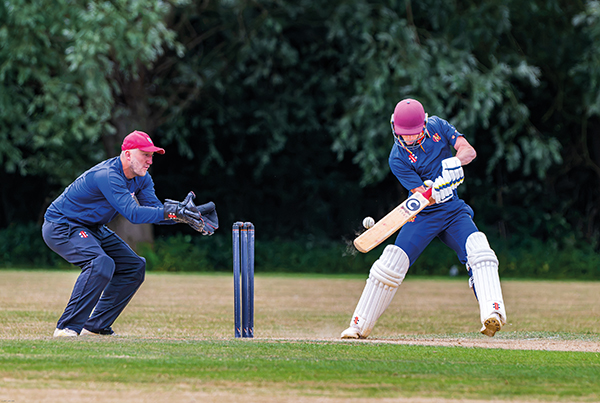
As summer begins to give way to autumn, cricket squares make way for football pitches, as another season of village sport begins. The activity may change, but the playing field continues to bring the community together.
One of the greatest strengths of the village sports field is that it is rarely home to just one club. Cricket, football, bowls and tennis may each have their own seasons, committees and competitions, yet they share something far more important than a postcode.
They share the same piece of ground and, in doing so, become part of the same community.
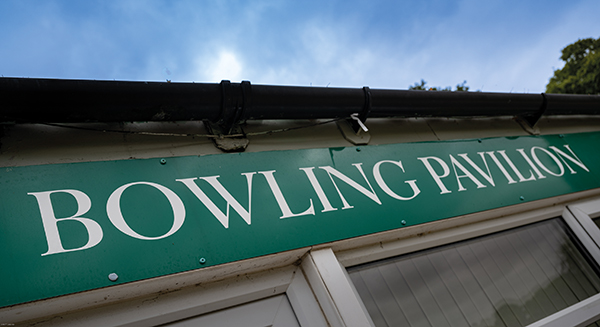
The pavilion belongs to everyone. Throughout the year it welcomes cricketers enjoying a summer tea, footballers warming up after a winter match, bowlers gathering for an afternoon’s competition, or tennis players catching up over a cup of tea once the final set has been played. The faces may change with the seasons, but the spirit remains the same.
That shared home also creates something else that is uniquely rural. Volunteers rarely see themselves as working for one club alone. They mow the grass, maintain the pavilion, organise fundraising events and support activities that benefit the whole village.
Different sports, different seasons and different age groups all come together because they share one common home.
Ultimately, that is the greatest lesson our village sports fields have to teach us. They are not simply places where games are played, but places where communities come together.
Not everyone who comes to the village sports ground arrives carrying a bat, racket or football. Many come simply to watch, encourage family and friends, catch up with neighbours or enjoy an afternoon in familiar company.
Whether playing, volunteering or standing on the touchline, everyone contributes to the atmosphere that has made these places such an important part of village life for generations.
In an age when so much of our lives is lived online, the village sports ground continues to offer something that no screen can replace – the opportunity to meet face-to-face, share experiences and strengthen the connections that bind a community together.
That, more than anything else, is why these places continue to matter.
Rural communities have already witnessed the quiet loss of many of the places that once defined village life. Village shops have disappeared, post offices have closed, churches often hold services less frequently and many village pubs have evolved into rural restaurants rather than the everyday meeting places they once were.
Against that changing landscape, the village sports ground has assumed an even greater importance. It remains one of the few places where people of all ages still come together naturally, where children and grandparents share the same space, where volunteers continue traditions that have endured for generations and where neighbours meet simply because they enjoy each other’s company.
Perhaps that is the true value of the village sports ground. It is not measured by league tables, trophies or winning seasons, but by the friendships it nurtures, the memories it creates and the sense of belonging it quietly sustains.
As we look forward we would benefit by remembering, a playing field can be replaced with houses, but the community that grows around it cannot.
We Recommend






Never miss a copy!
Big savings when you take out a subscription.
Problem displaying Facebook posts. Backup cache in use.
Click to show error