

Our rural disconnect
Matt Limb OBE considers whether there is a growing lack of understanding and education about our countryside and respect for rural life.
There was a time when most people understood the countryside instinctively. They knew fields were not empty spaces to wander across, that gates were left as they were found for a reason, and that the landscape around them was created not for appearance but for employment. Today, that understanding feels as though it is slipping away. Increasingly, rural Britain is viewed primarily as a place of recreation, or through the lens of social media, where the picture matters more than how the countryside functions. The result is not only frustration for those who live and work there, but a growing disconnect between town and country that risks damaging both.
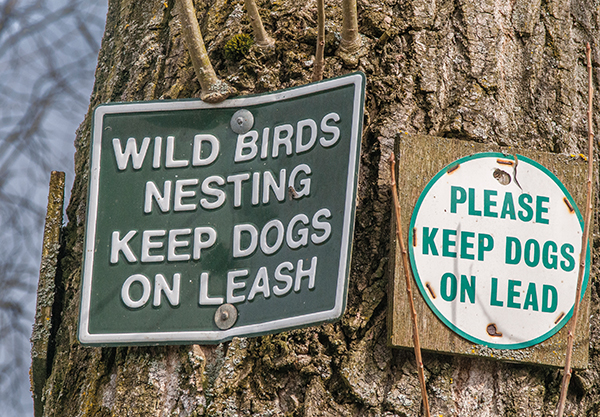
It reveals itself in countless small acts. Dogs allowed to run loose through fields of livestock while owners insist they are “only being friendly”. Cars abandoned across gateways as people do not understand farmers need access on a Sunday afternoon. Crops flattened by walkers searching for a shortcut away from the public footpath. Even during periods of wildfire warnings, disposable barbecues still appear, often discarded alongside drinks bottles and fast-food wrappers as though somebody else will deal with their consequences. Perhaps most worrying of all is that much of this behaviour no longer comes from deliberate malice, but from complete unfamiliarity.
Many people now grow up with little connection to the countryside beyond very occasional and selected visits, television, or online images shaped by artificial intelligence.
The practical realities of rural life, the long hours in all seasons and the management of livestock and wildlife, have become increasingly distant concepts to those who only experience the countryside as consumers of it.
Social media has undoubtedly amplified the problem. Locations can now attract huge numbers not because of their history, wildlife or rural heritage, but because they have become fashionable online. A field of rapeseed or a lavender farm can suddenly become an unofficial photography location. The pursuit of the perfect image often defeats common sense, courtesy and sometimes even personal safety.
Fly-tipping perhaps says more about modern attitudes towards the countryside than almost anything else. The quiet lane or farm entrance becomes, in effect, somebody else’s problem. Yet for the farmer arriving at first light to find a pile of domestic waste dumped at a field entrance, the reality is very different. Time and money must be spent clearing it, wildlife is put at risk and an already demanding working day made harder still.
But none of this is about discouraging people from enjoying our countryside. Quite the opposite. Access to rural Britain remains one of the greatest privileges of living in this country. But access and enjoyment should come hand in hand with understanding and especially respect. The countryside is not simply scenery. It is a living, working environment that feeds us, employs thousands of people and quietly shapes our national character.
Rural challenges
Perhaps the real challenge is not one of enforcement, but one of education and reconnection. Part of the difficulty is that modern Britain is now several generations removed from rural life.
Not so long ago, families living in towns had links to rural Britain, with seasonal work and relatives living and more importantly working in the countryside. Children understood that livestock could be dangerous, crops represented income and machinery was not there for display. That quiet education happened naturally because the countryside remained woven into our everyday lives.
Today, many people encounter rural Britain only occasionally and often superficially. A countryside walk is now planned through a smartphone app, a beauty spot discovered through social media.
Yet the deeper seasons of the countryside, lambing, harvesting, conservation work, shooting, forestry, drainage and livestock management often remain unseen and not understood. The result is not necessarily disrespect born from bad intentions, but misunderstanding born from an ever-growing distance.
The Countryside Code exists for good reason. Many of the principles it promotes were once simply understood as common courtesy. Respect livestock, keep dogs under control, leave gates as you find them. They are not complicated ideas, but they rely upon at least some understanding of how the countryside functions. Increasingly, however, rural practices that would once have been familiar are now misunderstood entirely.
I remember a farmer being reported to the police by a concerned passer-by who believed cattle in a field were being poorly treated as their shelter was too small. The structure in question was in fact a cattle creep, designed specifically to allow young calves access to feed while preventing larger mature cows from entering. Similar tensions increasingly appear around entirely normal farming practices. A hill farmer was forced to erect screening alongside a public footpath after complaints from walkers who objected to seeing sheep lambing in view of the path. What for generations would simply have been recognised as natural and part of rural life had somehow become, to some, offensive or inappropriate to witness.
Farming is not a carefully curated visitor attraction staged for public comfort and social media approval. It is often noisy, muddy, unpredictable and governed by weather, livestock and seasons. Birth, death, machinery, mud and hard physical work are not interruptions to the countryside experience; they are the countryside experience.
A few years ago, I drove past a farm displaying signs for Open Farm Sunday. My immediate reaction was rather cynical. I thought most farmers had better things to do on a Sunday afternoon than guide visitors around fields. Like many people connected to rural life, I instinctively saw the countryside as something obvious and understood.
Yet as I continued driving, I found myself reflecting on a survey which claimed more than a third of teenagers did not know bacon came from pigs and almost as many failed to associate milk with dairy cows. Other studies have suggested primary school children believe cheese is made from plants, while a quarter think fish fingers come from chickens and many reportedly had no idea carrots grow underground, believing they were harvested from bushes.
They are the sort of statistics people repeat with a shake of the head and a laugh of disbelief. But beneath the humour lies something more serious. They point towards an ever-growing disconnect between people and the origins of their food, the realities of farming and the practical workings of the countryside itself.
Perhaps those farmers opening their gates for Open Farm Sunday understood something important after all. Education about the countryside no longer happens by accident as it once did. It must now be explained, demonstrated, then experienced. If younger generations now discover much of the world through social media and online content, then perhaps rural Britain must learn to communicate through such channels rather than dismiss them. For all the frustrations of social media, it offers an opportunity that did not exist a generation ago. Farmers, gamekeepers, conservationists and rural communities can now explain directly to millions of people what they do and why they do it. A short video showing lambing, harvesting or the realities of maintaining footpaths and hedgerows can sometimes educate far more than a printed leaflet or warning sign ever could.
Rebuilding connections
Thankfully, many in the rural community are beginning to recognise this. Across social media platforms, a growing number of farmers are documenting daily life on the land, with honesty and humour.
In doing so, they are quietly rebuilding connections between the public and the countryside. Some explain why certain farming practices take place; others show the pressures of weather and animal welfare. Many simply offer an insight into a way of life that large parts of the population rarely encounter first-hand anymore.
Events such as Open Farm Sunday now feel rather more important than I first gave them credit for. They are not simply public relations exercises for agriculture, but opportunities to rebuild understanding. For many children and indeed adults, these visits may provide a rare insight into where food comes from, how livestock are cared for and the scale of work required to manage the countryside responsibly.
Perhaps the challenge for rural Britain is not merely to protect the countryside from misunderstanding, but to actively invite people to understand it better. That will sometimes require patience, particularly when confronted by questions that may seem astonishingly naïve. No meaningful question about the countryside is ever truly stupid if it is asked with genuine curiosity.
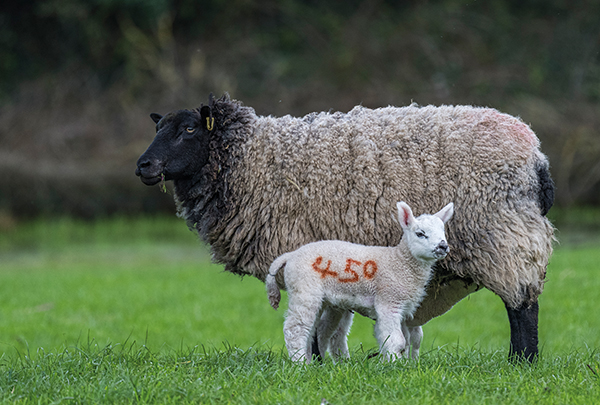
Conversations explaining why sheep are separated during lambing or why fields are left untouched during certain seasons become opportunities to rebuild a little of the understanding that has been lost.
In many ways, education may now be just as important to the future of the countryside as any legislation or enforcement. Respect rarely grows from criticism alone. More often, it grows from understanding and personal connection. The clock is perhaps ticking faster than many of us realise. Rural knowledge that once passed naturally from one generation to the next is fading remarkably quickly and once lost, it will not easily be rebuilt. Reconnecting people with the countryside will require effort from schools, families, farming communities and rural organisations alike. It will require patience, openness and a willingness not to criticise misunderstanding, but to help correct and reconnect it.
Our countryside has always evolved and adapted. Perhaps now those who care most deeply about it must do the same. Because if future generations are to respect rural Britain, they must first be given the chance to properly understand it and how it works.
We Recommend






Never miss a copy!
Big savings when you take out a subscription.
Problem displaying Facebook posts. Backup cache in use.
Click to show error