


What Students Can Learn From Working in Lincoln
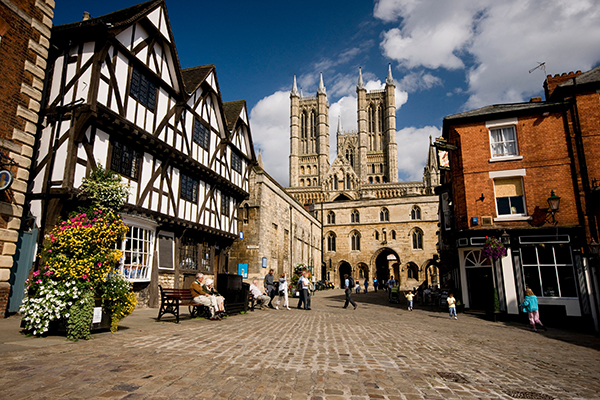
Not every summer job will lead directly to a career. A temporary role can still help you understand how workplaces function, build transferable skills, gain confidence, and expand your network.
From Summer Job to Career: What Students Can Learn From Working in Lincoln
For many students, a summer job is a practical way to earn money between university terms. However, the experience can offer much more than a few months of income. Working during the summer is also an opportunity to develop professional skills, understand different working environments, and start thinking more seriously about life after graduation.
For students living or studying in Lincoln, summer work can be different. There are opportunities across hospitality, retail, tourism, administration, events, customer service, and other local industries. Feel free to go to the Jooble employment site to check all the available career opportunities. Some roles may be closely connected to a student’s future career. On the other hand, others may seem completely unrelated. Both can be valuable.
Getting Experience for Your CV
One of the common challenges students face when applying for their first professional role is a lack of experience. The solution is not necessarily to wait until you find the perfect internship. Almost any job can provide relevant experience if you know how to present it. Instead of focusing only on the job title, think about your responsibilities and achievements.
Learning How to Work in a Professional Environment
One of the biggest benefits of a summer job is simply gaining experience of being in a workplace. University fosters independent learning, research, and subject knowledge. Meanwhile, there is a different set of expectations in a business atmosphere. Employees must work with schedules, communicate with their peers, adhere to processes, work within deadlines, and be accountable for their work. Good professional habits can be formed through even the most basic of tasks.
Displays reliability by arriving on time to each shift. There are several tasks that are done simultaneously, and that improves time management. Working with a manager provides experience to receive instruction and feedback. Some of these can be minor details. They are nonetheless a significant aspect of the change from school to work.
Building Transferable Skills
A summer job does not need to be directly related to your degree to strengthen your CV. A history student working in a restaurant, for example, may not be gaining experience related to historical research. However, they are likely to be developing communication, teamwork, organisation, and problem-solving skills. These are transferable skills. They can be useful across different jobs and industries. Some of the most valuable skills students can develop through summer work are as follows:
Communication — speaking clearly with customers, colleagues, and managers.
Teamwork — cooperating with people who may have different roles, backgrounds, and working styles.
Time management — balancing different responsibilities and completing tasks within deadlines.
Problem-solving — responding to unexpected situations and finding practical solutions.
Adaptability — learning new systems, processes, or responsibilities quickly.
Customer service — understanding people’s needs and responding professionally.
Responsibility — becoming accountable for tasks and the quality of your work.
When it comes to applying for graduate jobs, being able to demonstrate these skills with real examples can make an application much stronger.
Understanding What Kind of Work Suits You
Students are often asked to make decisions about their future career before they have much experience of the workplace. Summer jobs can come in handy to fill up that gap. Having a variety of experiences can help you to determine what you like, what you’re good at, and what you don’t want to do in the future.
A hospitality professional, for instance, may realise that they like talking to clients but enjoy the organising of operations behind the scenes. Another student may find he enjoys the work done on his own rather than in a large group. It is also helpful to find out if a certain kind of work is not suitable for you. Part of career planning is to discover opportunities. It is also about knowing what you like and don’t like.
Did you regularly communicate with customers?
Did you help train someone new?
Were you trusted to open or close a workplace?
Did you solve problems independently?
Did you work during particularly busy periods?
These experiences can become useful examples on a CV or during an interview. Employers understand that students and recent graduates are at the beginning of their careers. What often matters is being able to show that you have already developed professional habits and can explain what you learned from previous roles.
Developing Confidence Through Experience
It’s a learning curve when you get hired, isn’t it? New colleagues to meet, new systems to learn, and new tasks to learn. For students with little or no work experience, that’s a good process.
Projects that were once new and strange may become commonplace after a few weeks. You are able to ask yourself the right questions, cope with errors, communicate with others, and make decisions without having to look around for what to do next all the time. This can help to develop the confidence of a professional. The thought of entering a new workplace will be much less daunting by the time you apply for an internship or graduate job.
Making Connections in Lincoln
Summer work can also help students to feel more at home in Lincoln outside of university life. You will be introduced to local businesses, organisations, managers, professionals and workers who you wouldn’t normally encounter elsewhere. It doesn’t have to be a direct link to an actual job offer.
The manager might be able to submit a reference later. Someone you know can let you know about an internship or position. You might become familiar with a local business that functions in the industry you’re interested in. These relationships can be especially helpful for students who are thinking about continuing their education in Lincoln. Being employed in the city is a chance to learn what jobs are available in the area.
Turning Summer Experience Into Career Experience
The real value of a summer job often becomes clearer later. When applying for future positions, think back to situations where you took responsibility, solved a problem, worked under pressure, supported a colleague, or dealt with an unexpected situation.
Those experiences can be used to answer common interview questions and demonstrate skills with concrete examples. It can also help to keep a simple record of your main responsibilities and achievements while you are still in the role. Several months later, it is surprisingly easy to forget the details.
Looking Beyond the Summer
Not all summer jobs will directly lead to a career. But it doesn’t have to. A temporary position can also help you learn more about the workplace, acquire transferable skills, get more confident, extend your network, and gain work experience to add to your CV.
The summer months can thus be more than a break between school years for students working in Lincoln. This can be a good chance to experience various kinds of work and begin to build up what they will look for after graduation. The work itself may only be for a couple of months. But the lessons you can learn from it can prove to be applicable far beyond summer.
We Recommend


Never miss a copy!
Big savings when you take out a subscription.
Problem displaying Facebook posts. Backup cache in use.
Click to show error