

The smack, the sailor and The Wash
Matt Limb OBE looks at how the 100-year-old sailing smack Victorious has been lovingly restored and returned to the Lincolnshire coastline.
When the invitation arrived to spend a day aboard Victorious, I was intrigued but not entirely convinced. Boats and sailing had never really been part of my life. Yes, I manage several ferry crossings each year on business and I have a healthy respect for those who make their living at sea, but I could hardly claim to know one end of a sail from the other.
As the day approached, I found myself feeling slightly apprehensive. I feared I would spend much of the day surrounded by experienced sailors discussing tides, weather and points of sail, while I nodded politely and tried not to look completely bewildered. Those doubts disappeared the moment I arrived at Fosdyke Bridge in South Holland.
For centuries, the waterways of Lincolnshire have connected the county to The Wash and beyond. They carried grain, coal and timber; linked communities separated by distance and marshland and helped shape the character of the coast we know today.
Even now, standing beside the River Welland as it approaches The Wash, there remains a sense that this is a place where Lincolnshire’s relationship with the sea can still be felt.
Maritime heritage
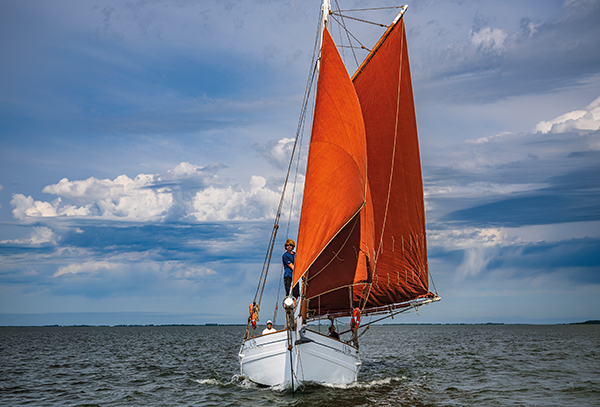
Moored quietly alongside the pontoon was Victorious. At first glance she appeared entirely at home in her surroundings. With graceful lines, varnished timber and a tall mast, but she immediately seemed to belong to a different age, recalling a time when vessels such as this were a familiar sight on the waters of The Wash.
More than a century after she was launched at King’s Lynn, Victorious remains a striking reminder of the maritime heritage shared by the communities that have lived and worked around this vast tidal estuary for generations.
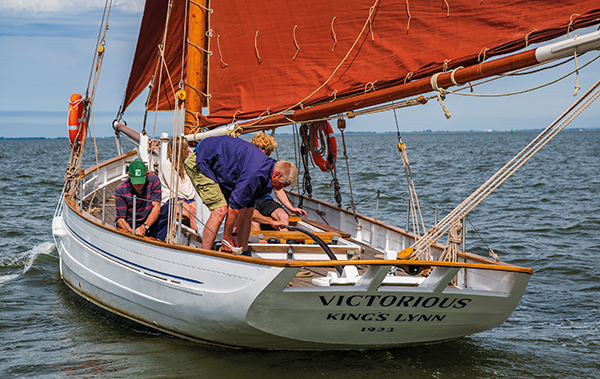
Built in 1923 by the renowned King’s Lynn boat builders Worfolk & Sons, Victorious was never intended to be a pleasure craft.
She was built to work, earning her living gathering cockles, mussels and whelks from the sands and channels of The Wash.
Generations of fishermen depended upon boats like her and, in many ways, they are very much a part of Lincolnshire’s story.
Standing on the pontoon at Fosdyke, looking across at her for the first time, it was difficult not to wonder what tales she might tell if she could speak and what adventures she had shared with her crew.
Before long, however, I would be meeting the man who knows that story better than anyone.
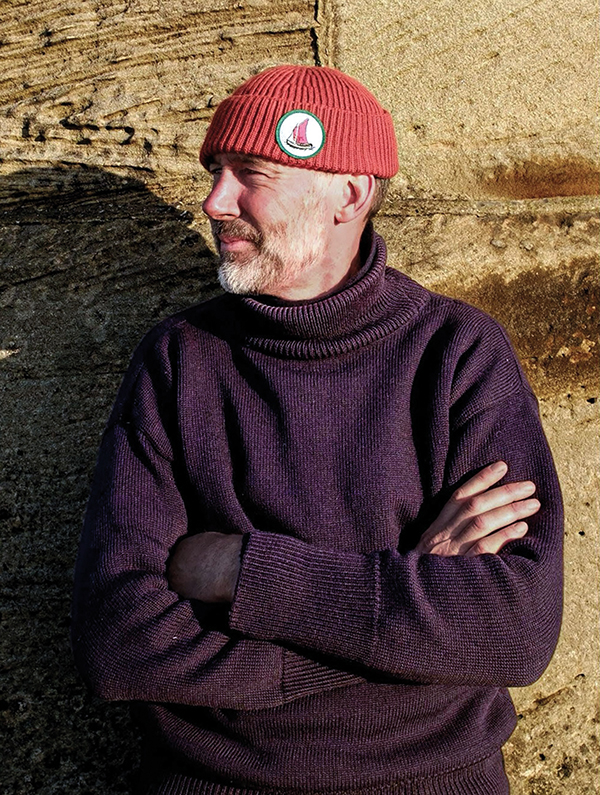
On the pontoon was Henry Chamberlain, owner of Victorious and founder of the Coastal Exploration Company. As we shook hands and exchanged introductions, it quickly became apparent that his own story was every bit as remarkable as that of the boat beside him.
Born and raised in Norfolk, Henry’s fascination with the sea was shaped by stories passed down through his family.
His grandfather, a former Chief Petty Officer who served through both World Wars, would recount tales of naval life and distant waters. Listening to stories of anti-slavery patrols off Zanzibar and adventures in far-flung corners of the world, Henry developed a fascination with the sea that would remain with him throughout his life.
Early sailing experiences strengthened that connection, eventually leading him into the Royal Marines. Commissioned as an officer, Henry spent much of his military career close to the water. Specialist boating and navigation training developed his seamanship, while deployments and training exercises took him from Arctic Norway to the jungles of Brunei and the islands of the Indian Ocean.
Following his time in the Royal Marines, Henry completed a Master’s Degree in Water Engineering before beginning a humanitarian career with the United Nations.
For much of the next decade he worked in some of the world’s most challenging and dangerous environments, including Darfur, South Sudan, Afghanistan, Pakistan and Somalia.
Yet it was during the Somalia famine that the foundations of Victorious and her future were laid.
Search for a vessel
Sitting on a beach near Mogadishu after a particularly difficult and dangerous week, Henry found himself thinking about his own future. With a young family and a career that regularly placed him in conflict zones, he began to picture a different way of life.
From that moment emerged the idea that would eventually become the Coastal Exploration Company. His vision was to introduce people to the extraordinary landscape, wildlife and maritime heritage of the coast through traditional boats and authentic experiences on the water. Henry began with several smaller vessels, including a traditional crab boat, plus a whelk boat and two mussel flats, but one ambition remained constant. He wanted a larger sailing vessel purpose-built for the waters of The Wash.
Finding one, however, proved far more difficult than he had imagined.
Many of the traditional working boats that once sailed from ports around The Wash had long since disappeared. Others survived only as neglected, rotting relics of a fast-fading maritime age. Then Henry heard of an old Norfolk sailing boat lying in Cornwall.
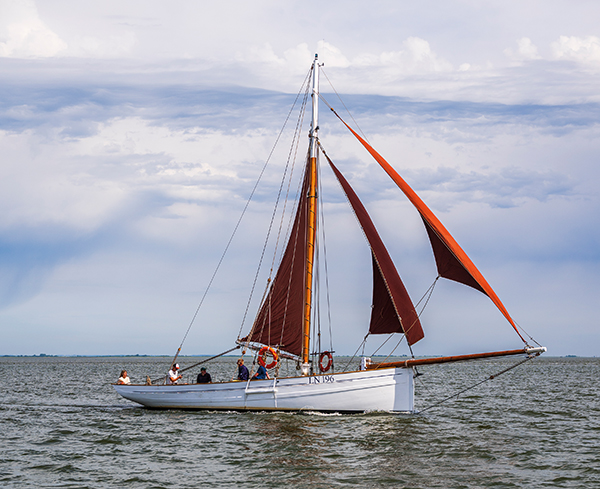
That vessel was Victorious. Built as a sailing smack, a type of working fishing vessel once common around the Lincolnshire Coast, she had been designed to work the demanding conditions of The Wash.
Purchased for just £4,000, she was exactly the sort of vessel Henry had spent years searching for. Years of neglect, however, meant that returning her to the water would require a restoration project far larger than anyone initially anticipated. Working with renowned boat builder Luke Powell and his team, Henry embarked on a painstaking effort to return her to life. The restoration took years and demanded considerable commitment and investment, but finally, in 2023, Victorious returned to the water exactly 100 years after her original launch.
There is something rather fitting about the parallel journeys of the boat and her owner. Both had travelled far from the waters of The Wash. Both had endured difficult periods. But both eventually found their way home.
For Henry, however, the significance of Victorious extends far beyond restoring a historic vessel. He believes boats such as this embody generations of accumulated knowledge. Long before computer modelling and modern naval architecture, local boat builders and fishermen refined their craft through experience, passing hard-earned lessons from one generation to the next.
Every curve of the hull, every aspect of the rig and every detail of the design reflect knowledge gained through centuries of working the tides, channels and shifting sandbanks of the Wash. Victorious is not simply a survivor from another age. In many ways she is a record of the people who built her, worked her and depended upon her for their livelihood. Perhaps that is what fascinates Henry most. In his eyes, Victorious is a floating archive of local knowledge, preserving skills and understanding that might otherwise have been lost.
Setting sail
A few weeks after meeting Henry, I returned to Fosdyke to experience Victorious under sail. Henry himself was overseas on United Nations business, but the vessel was in the capable hands of the crew helping to bring his vision to life.
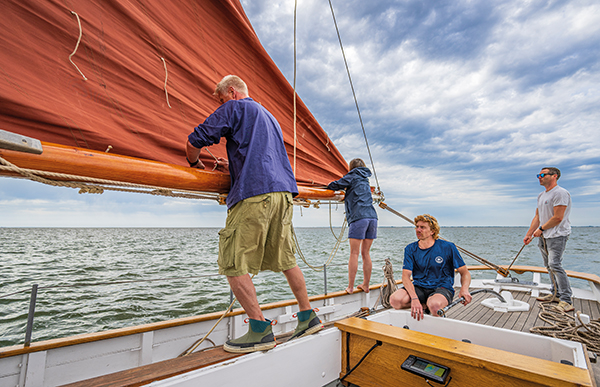
Under the watchful eye of our skipper Nick, the crew worked steadily through the morning, practising manoeuvres and becoming more familiar with the vessel.
There was a clear sense that this was more than a simple day on the water. It was part of an ongoing process of building the team and skills that will help carry Victorious forward into her second century as a working vessel.
As we moved out onto The Wash, it became easier to understand what had inspired Henry. Vast skies stretched overhead while the landscape constantly shifted with tide, time and light.
What many people see as an empty expanse of mud and water revealed itself as a place rich in wildlife, history and character.
Once under sail, the most striking feature was the silence. Away from roads, engines and the constant background noise of modern life, there was only the sound of water moving along the hull, the occasional creak of timber and the calls of seabirds overhead.
Later, we paused for breakfast while watching a group of seals hauled out on a sandbank that was slowly disappearing beneath the incoming tide. It was a simple moment, but one that seemed to capture exactly what Henry is trying to achieve through Victorious: helping people slow down, reconnect with the natural world and experience The Wash in a way that few now do.
Thankfully, today Victorious has found a new role. Guests can spend long days exploring The Wash under sail, discovering its wildlife, history and hidden corners. Henry hopes to expand opportunities for traditional seamanship training, educational projects and even the traditional transportation of cargo under sail. More importantly, he wants people to reconnect with the landscape and the county’s maritime heritage.
The future of Victorious depends upon more than maintaining her hull, sails and rigging. Like many traditional vessels, she also depends upon people willing to learn and preserve the unique skills needed to sail her. As the Coastal Exploration Company expands its activities on The Wash, Henry is keen to build a wider team around the vessel. While his own work still takes him overseas at times, he hopes to attract skippers, crew and volunteers who share his enthusiasm for traditional sailing and preserving the maritime heritage of the Lincolnshire coast.
For Henry, preserving Victorious was never about simply saving a boat. It is about ensuring that the knowledge, skills and traditions associated with vessels such as this are passed on to the next generation, before history is lost and they before they disappear.
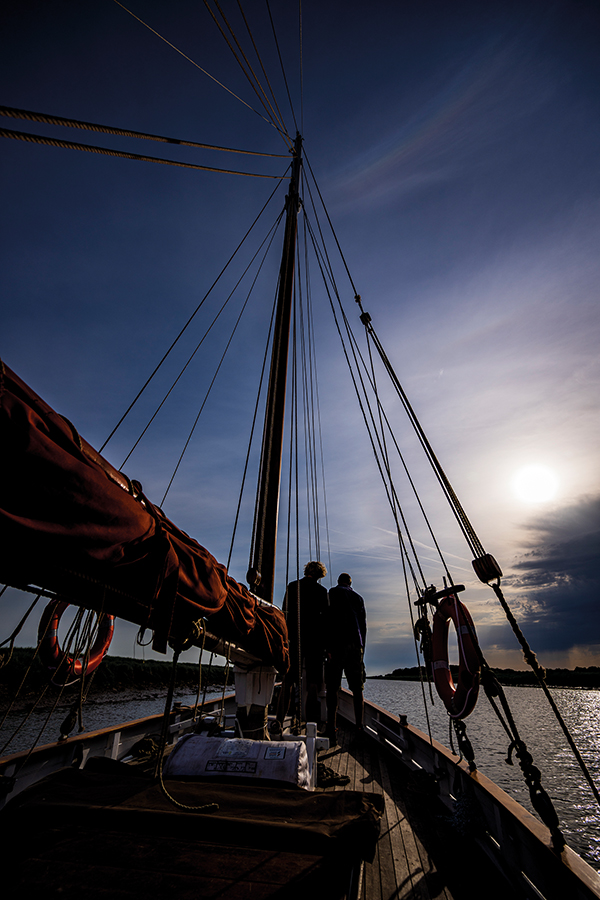
As our journey came to an end in the late evening light and Fosdyke once again came into view, it was clear that Victorious is not simply a restoration project. It is also about preserving an important part of the maritime knowledge. More than a century after she first slipped into the water at King’s Lynn, Victorious is once again doing what she was built to do: working on the waters for which she was designed. Henry has safeguarded a living connection to the generations of fishermen, sailors and boat builders whose knowledge shaped life around The Wash. He has also ensured that connection remains available to future generations.
Victorious is not simply a reminder of the past. She is proof that some traditions, skills and knowledge are still worth carrying forward.
Visit www.coastalexplorationcompany.co.uk
We Recommend




Never miss a copy!
Big savings when you take out a subscription.
Problem displaying Facebook posts. Backup cache in use.
Click to show error