

Reflections on a vibrant herb garden
Steffie Shields discusses reliable herbs that can survive a drought.
Regular readers may recall ‘Old Bones and New Beginnings’, my recent article. John and Angela Holmes planned to open their Battleford Hall garden in Fleet Hargate for the National Garden Scheme (NGS). I visited in February, so I could spread the word.
The Wash winds proved unforgivably harsh for these old bones! I managed only a few dismal photographs in bleak, wintry light.
Somehow, their extraordinary Gothic rectory, and its remarkable Victorian setting held me spellbound.
I vowed to return. By mid-July, with the whole country melting under record-breaking heatwaves, I drove towards Fleet passing parched fields, feeling for embattled Fen farmers. I wondered what progress had been made with the Holmes’ garden renovation.
Had its new planting been plagued by lack of rainfall?
Some six months ago, I remember being shown a “mixed bag” of pots containing a collection of plants waiting to be given a home in lacklustre borders defined by Victorian edging.
Four standard trees, apparently olive trees, cloaked in protective wrapping against bitter elements provide the “bones” of Angela’s optimistic new herb garden.
Blooming borders
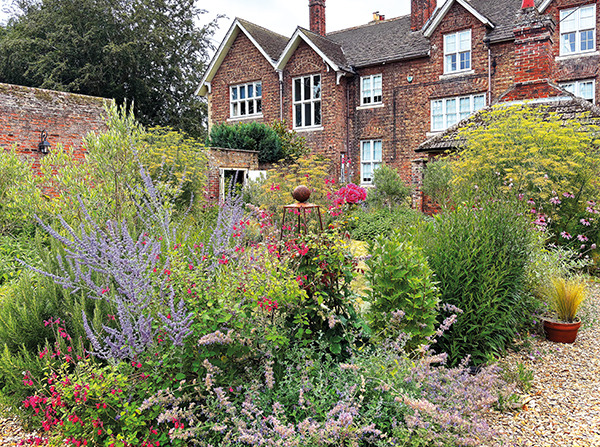
One extreme to another – from forbidding gloom, I approached along a lush, dappled woodland drive, almost as if somewhere else, towards the splendid, warm red and yellow brick hall, basking in glorious sunshine.
Its Gothic architecture seemed appropriate and proudly protective of St Mary Magdalene’s Church, with its unusual separate church tower and spire. Captivating garden walks made for an inspirational afternoon, equally as heavenly.
John led me first to the compact walled garden sandwiched between house and coach-house and generously allowed me time to take in a total transformation. In just a few months, their ravishing herb borders are thriving, their triangular edging completely hidden.
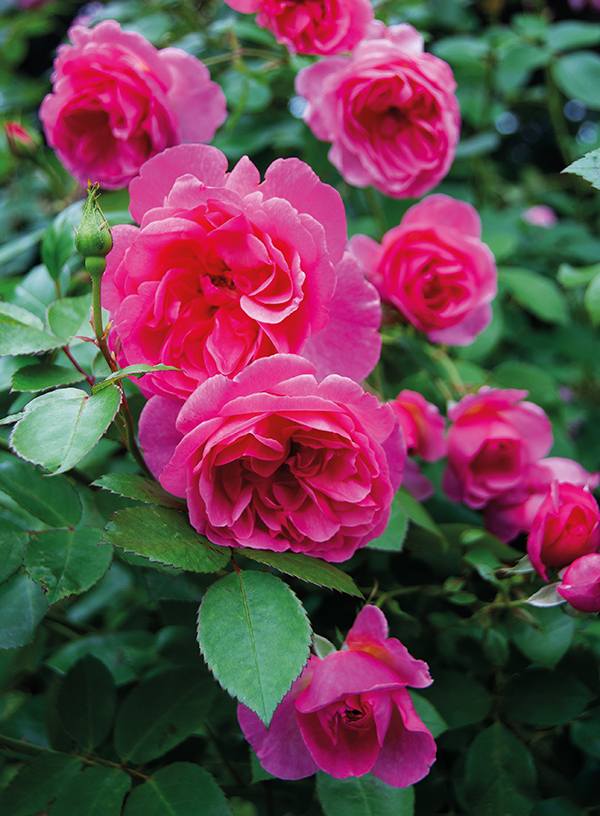
Notably right in front of both entrances, in opposite corners on the north-west south-west diagonal, two handsome roses had me from “hello” with vibrant splashes of colour. An apt choice, Rosa ‘Gabriel Oak’ is named after a 19th-century character in Far from the Madding Crowd, created by author Thomas Hardy.
David Austin accurately describes this magnificent, broad shrub rose as having “mulberry purple stems bearing rich pink, many-petalled blooms that lend a fruity fragrance to the air”.
Varied herbs bring unexpected colour, height, and texture, their sweet-smelling scents intensified by protective red brick walls. The aforementioned pairs of olive trees should grow to give structure, like sentinels midway in the north and south borders.
Colourful collection
Sprawling at the feet of each rose, a catmint with soft, grey leaves can be relied on to repeat-flower, given a quick cutback.
The same odd clip will encourage its taller neighbour, a Russian sage, to keep producing its similar deeply aromatic violet-blue flowers and greyish leaves, waving like large wands, as if narrow feather dusters, until the first autumn frosts.
Until recently known as Perovskia, this tough plant has now joined the large, diverse sage family that thrives in poor soil, renamed: Salvia Yangii ‘Blue Spire’. Was Angela drawn to this drought-resistant herb as a nod to its location?
Surely a Russian sage should be red! Instead, a very different sage, Salvia ‘Jezebel’ brings her game, making mounds of two-lipped, scarlet flowers in whorls on spikes.
A fine contrast in looks and meaning to another companion plant, Rosemary, a popular blue-flowering evergreen nearby, representing remembrance.
Yellow fennel, in the form of flat panicles of minuscule flowers, towers over a smaller, strong-scented curry plant in the same shade, completiung the planned primary colours.
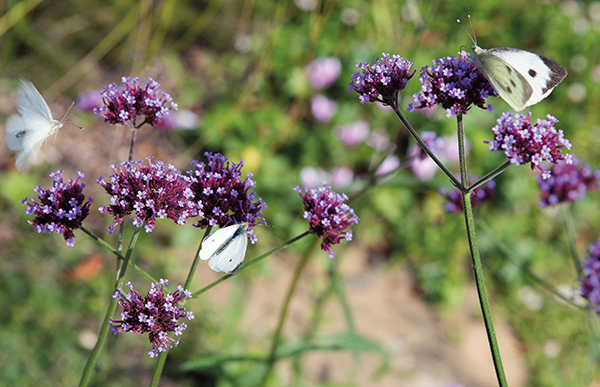
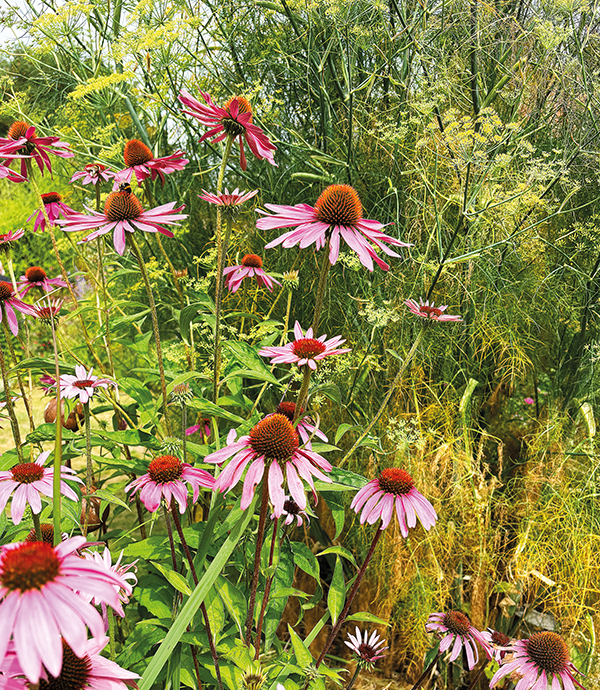
Each herb is repeated diagonally opposite in the other half of the rectangle. In between, swaying strands of Verbena bonariensis, ornamented with clusters of rich purple florets, partner Echinacea purpurea, a medicinal remedy for the common cold.
Its distinctive daisy-like orangey-centred, pinkish-mauve coneflowers also feature in a large swathe in HM The King’s new ‘Venus Garden’ at Windsor Castle.
Mulling over this vivid herbal experience with various arresting fragrances has fuelled a resolve to revamp our “kitchen window” border, with “old”: three varied repeat-flowering roses.
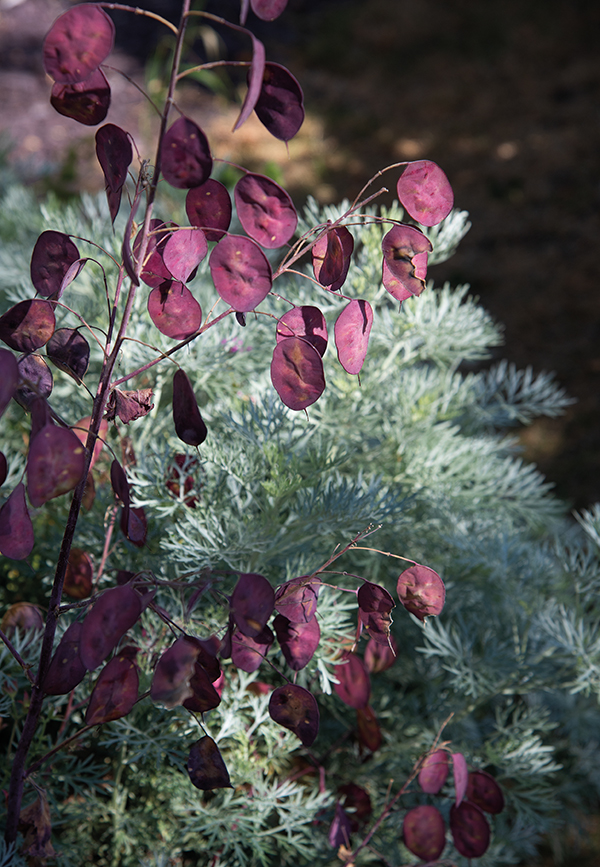
I intend to introduce fennel as backing support to a yellow tree peony and hang on to my “hottest” combination this year – self-seeded honesty seed heads contrasting with a feathery Artemisia ‘Powys Castle’, flourishing pleasantly without any watering.
At 500ft above sea-level, our windswept garden is often chillier than surrounding countryside. I have had little success with growing verbena. However, last year a discovery in a Haconby cottage garden, a compact, lower growing, and equally airy and attractive offspring, is recommended for both patio pot and the front of borders.
Verbena ‘Lollipop’ was alive with small and large white butterflies pollinating its violet clusters. Where “filler” hardy geraniums have been flagging in the heat, I hope to trial colourful, drought-tolerant herbs, like ‘Lollipop’ and Salvia ‘Black and Bloom’.
Scented choices
Perhaps the idea of a herb garden, or potager as championed back in the 1980s by that wise gardening guru Rosemary Verey, might prompt your decision to restore those treasured plants and shrubs that “popped their clogs” this summer. Her advice floated HRH Prince Charles’ boat back in the early days of Highgrove. Pinch furry apple mint or a lime-green, lemon balm leaf between your fingers. Then smell your fingertips, to be rewarded with “zest of life” enjoyment.
A wide selection of beneficial herbs tolerate drought. Silver-leaved plants require little or no watering, should another hosepipe ban be enforced. Aromatic Mediterranean herbs are mostly more resilient and best planted in the autumn to establish an adequate root system over winter – except for lavender and rosemary, best dug in come spring.
Remember to look out for the NGS charity’s 2027 Centenary celebrations when Battleford Hall will open again in support of worthwhile fundraising. Mark your calendar and go. Time will slow down, “far from the madding crowd”, and might even come to a standstill!
Angela has trained as an artist and horticulturalist. Her creativity, partnered with John’s equal dedication, is also seen in magnificent herbaceous borders either side of their free-standing conservatory, and in another oasis of peace, the restored Rose Garden, a traditional four-quartered parterre in keeping with the house’s heyday.
Mirror planting is the simple key to Angela’s engaging herbal garden design. The borders in one half of the rectangle effectively reflect the other.
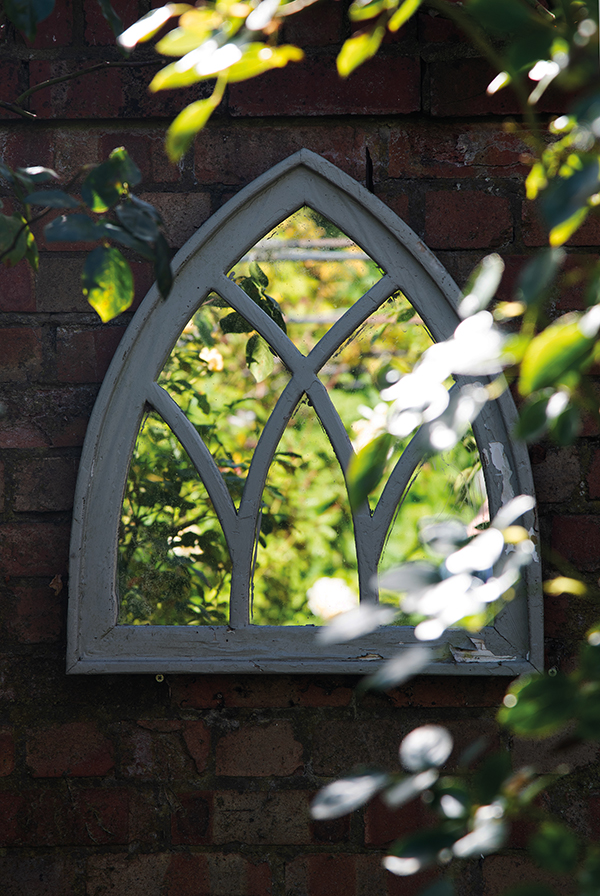
One humble suggestion to reflect both her choice of unusually vivid herbs and St Mary Magadalene’s medieval architecture: a Gothic mirror, like one spied in a Swaton garden, on the warm west wall, might just be the “icing on the cake”.
We Recommend






Never miss a copy!
Big savings when you take out a subscription.
THE LINCOLNSHIRE POACHER WINTER 2026 ISSUE OUT NOW!The quarterly companion to ‘LINCOLNSHIRE LIFE’, The Poacher is packed with yellowbelly history, folklore, poetry and reminiscences.Download today at www.lincolnshirelife.co.uk/product/lincolnshire-poacher-winter-2026-digital-copyA subscription makes the perfect Christmas gift for lovers of our county, order at www.lincolnshirelife.co.uk/product/lincolnshire-poacher-annual-subscription